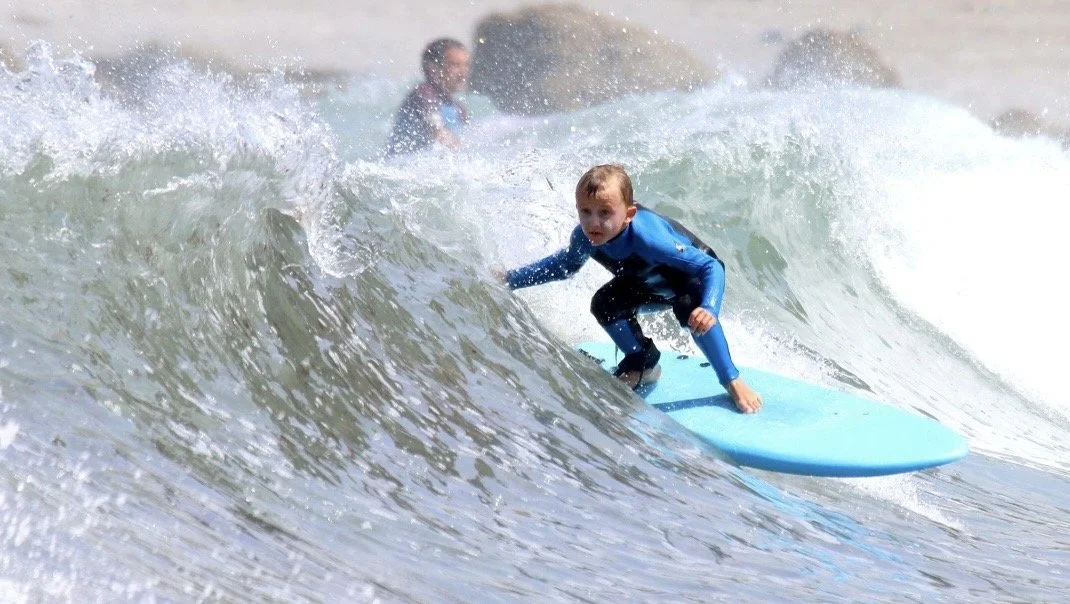
Stage 1 — The Beginning
It all started at Trevaunance Cove — and it had nothing to do with surf travel
Before Bali. Before the Maldives. Before the Mentawai Islands. There was a three-year-old in a too-big wetsuit, falling off a foamie in the whitewash, coming up every time with the biggest smile you've ever seen.
Most surf travel blogs start with an exotic destination. A perfect barrel. A boat trip somewhere with no name on a map. This one starts in Cornwall, in a cove you've probably never heard of, in water that was almost certainly too cold.
Trevaunance Cove, St Agnes. That's where it began.
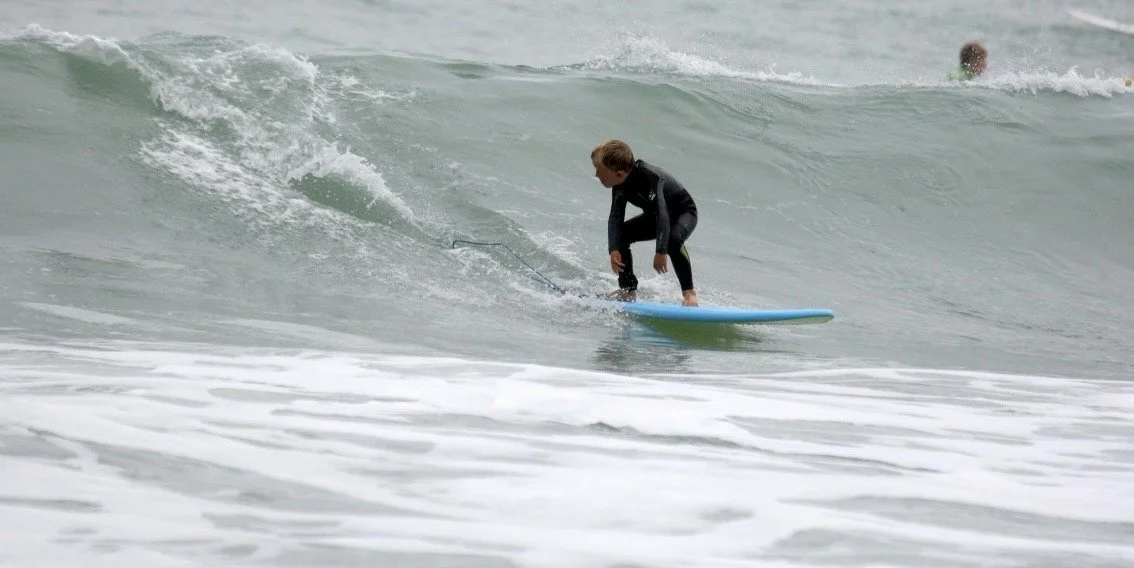
Casual look back at Trevaunance Cove
It all started at Trevaunance Cove — and it had nothing to do with surf travel
Before Bali. Before the Maldives. Before the Mentawai Islands. There was a three-year-old in a too-big wetsuit, falling off a foamie in the whitewash, coming up every time with the biggest smile you've ever seen.
Most surf travel blogs start with an exotic destination. A perfect barrel. A boat trip somewhere with no name on a map. This one starts in Cornwall, in a cove you've probably never heard of, in water that was almost certainly too cold.
Trevaunance Cove, St Agnes. That's where it began.
Age three. An Iglu wetsuit. Knee-deep water.
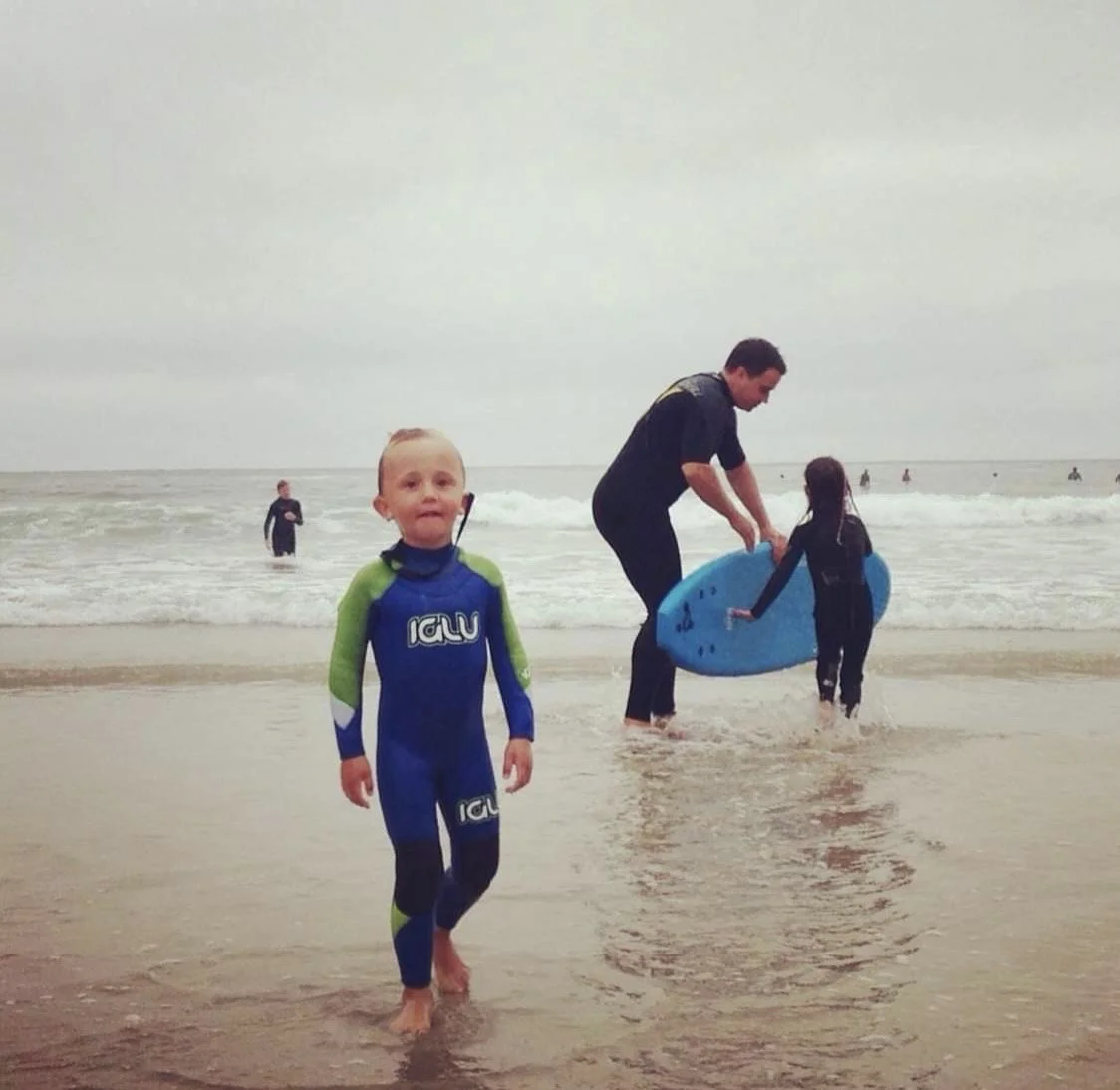
Ben in his warm Iglu wetsuit
Ben was three years old when he first stood on a board. We used an Igloo wetsuit — the ones with the long back zip that are easy to wrestle a small child into and actually keep them warm — which sounds like a small detail but matters enormously when you're trying to get a toddler enthusiastic about cold Cornish water.
The setup couldn't have been simpler. Knee-deep water. White water waves rolling through. Me standing behind him, board under his feet, waiting for a wave, then pushing him in and watching him ride it all the way to the beach.
He fell off. A lot. Every single time he came up, I made sure the first thing he saw was my face — smiling, arms up, high five ready. He needed to know two things immediately: that he was safe, and that we were having fun. Both of those things had to be true before anything else.
That's not a coaching technique. That's the whole philosophy.
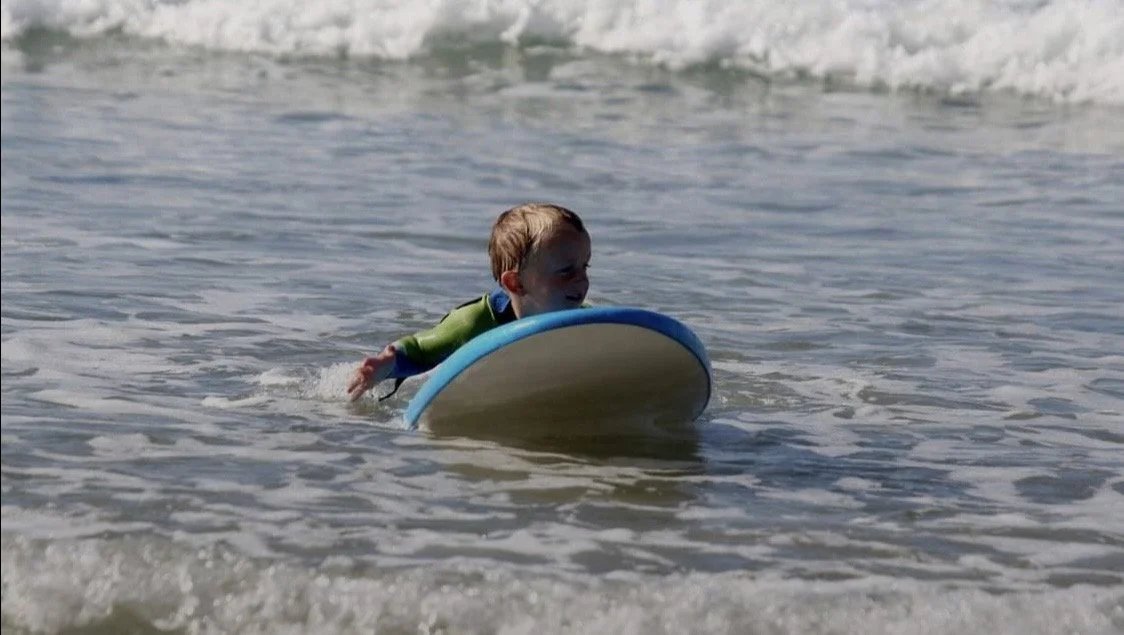
Having fun in the whitewater
The worst thing you can do
I've seen it happen on beaches all over the world — a parent who wants their child to love surfing so badly that they push too hard, go too deep, choose a wave that's slightly too big. The child goes under. Comes up scared. And something shifts. Fear gets in, and once fear is in, it's very hard to get it back out.
A bad experience with the sea at that age doesn't just ruin that session. It can ruin years of sessions. The ocean becomes something to be wary of rather than something to run towards.
Fun has to be at the absolute heart of everything you do in those early stages. Not progression. Not technique. Not catching the right wave. Fun. If they're coming up laughing, you're doing it right. If they're coming up crying, you've gone too far — go back to shallower water, smaller waves, more smiles.
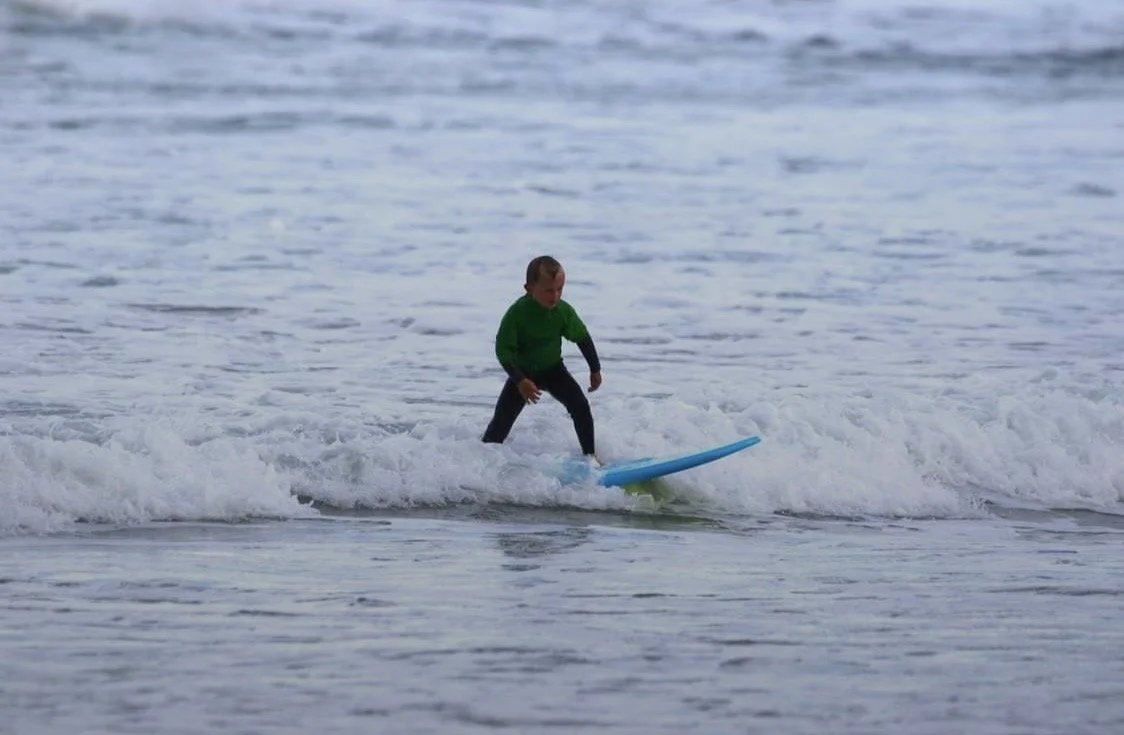
Cruising in on his foamie!
The group that formed around us
Something interesting happened over those sessions at Trevaunance. Other parents were joining in too. Soon there was a little group of us — mums and dads all standing knee-deep in the Atlantic, pushing our kids into whitewash, high-fiving every wipeout.
We formalised it eventually into a board riders club with a few mates. Group sessions, always the same ethos: keep the vibes high, keep the waves small, keep it fun. What we noticed was that when the energy in the water was good — when the adults were laughing as much as the kids — the children naturally went deeper. Nobody told them to. They just wanted more.
That's the thing about fun. It's self-propelling.
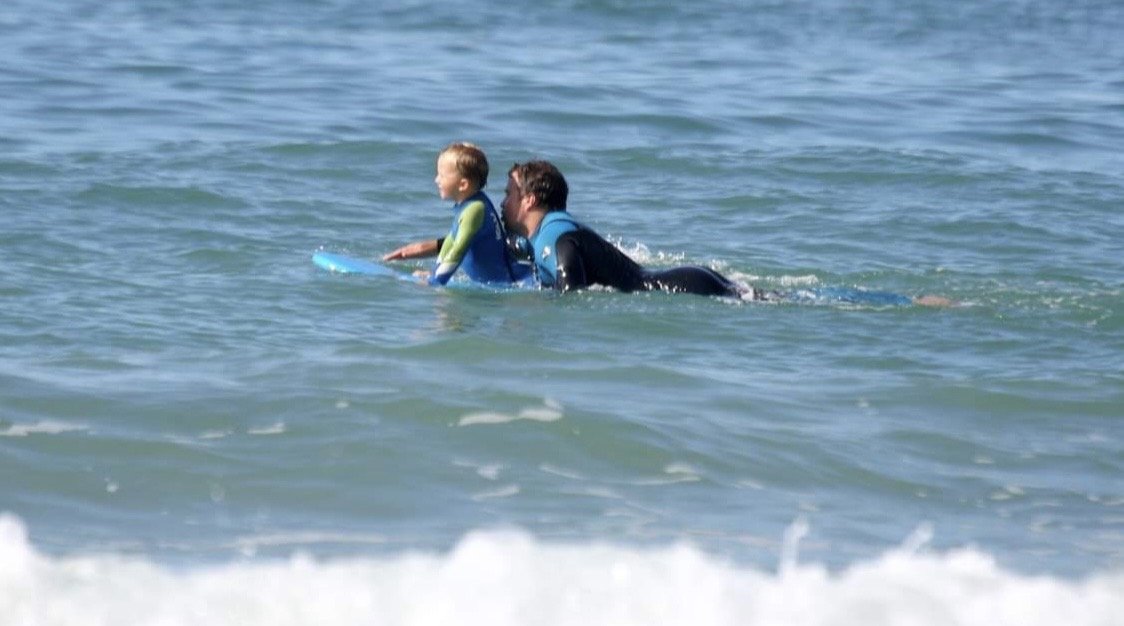
Safe with Dad
The moment it changed
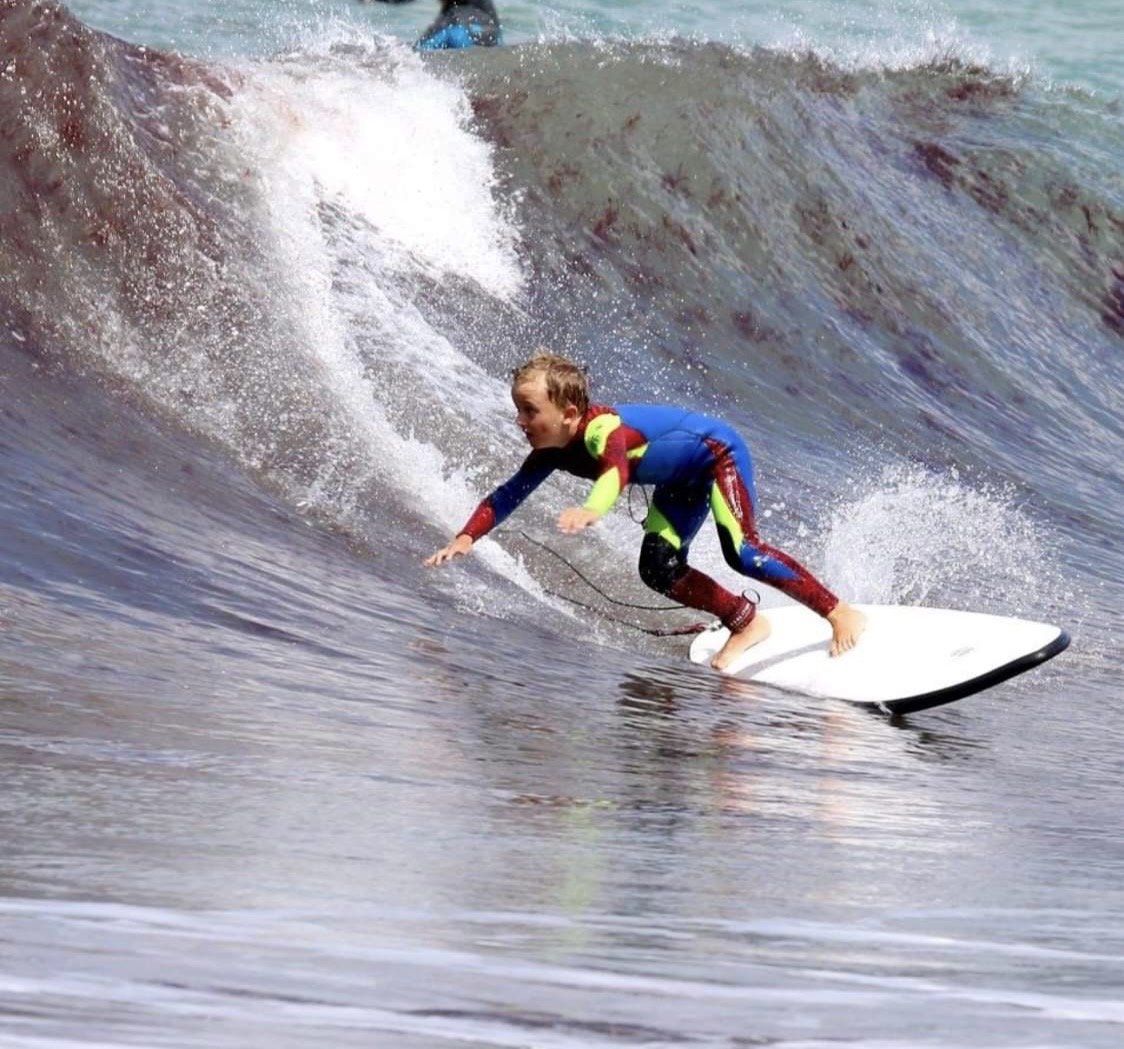
Learning to bottom turn at Trevaunance Cove
Gradually, without really planning it, the sessions evolved. The whitewash became green waves. Knee-deep became waist-deep. The pushes became longer, the rides further, the smiles bigger. Ben moved onto a soft-tech foamie and started riding along the face to the shore rather than just straight in.
He wasn't just standing up anymore. He was surfing.
And I hadn't taught him a single technique. I'd just kept pushing him into waves, making sure every wipeout ended in a high five, and let the ocean do the rest.
The Stage 1 lesson: Forget destinations. Forget boards. Forget technique. Your local beachbreak is the best place in the world to start — because it's close enough to go again next weekend, and going again next weekend is the entire point. The goal of Stage 1 isn't to create a surfer. It's to create a child who wants to come back.
Bali can wait. The Maldives can wait. Everything that comes later on this blog — every destination guide, every gear recommendation, every trip we've taken together — is built on what happened first in a cove in Cornwall.
Find your Trevaunance. Start there.
Stage 2 — The Push
Tungku Beach, Brunei — where the real surfing began (and yes, there are crocodiles)
We moved from Cornwall to Brunei when Ben was six. I had no idea what the waves would be like. What I found was an empty beachbreak, a handful of the friendliest surfers I've ever met, and the perfect place to push a kid into his first green waves. Oh, and saltwater crocodiles in the river next door.
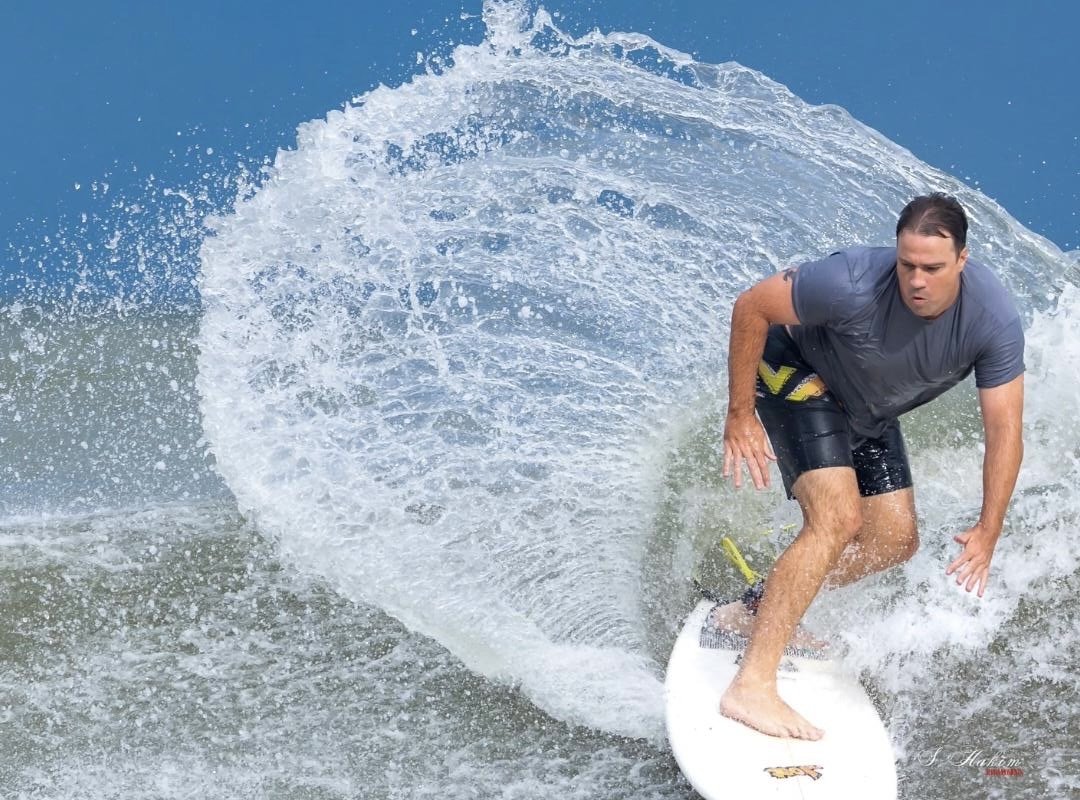
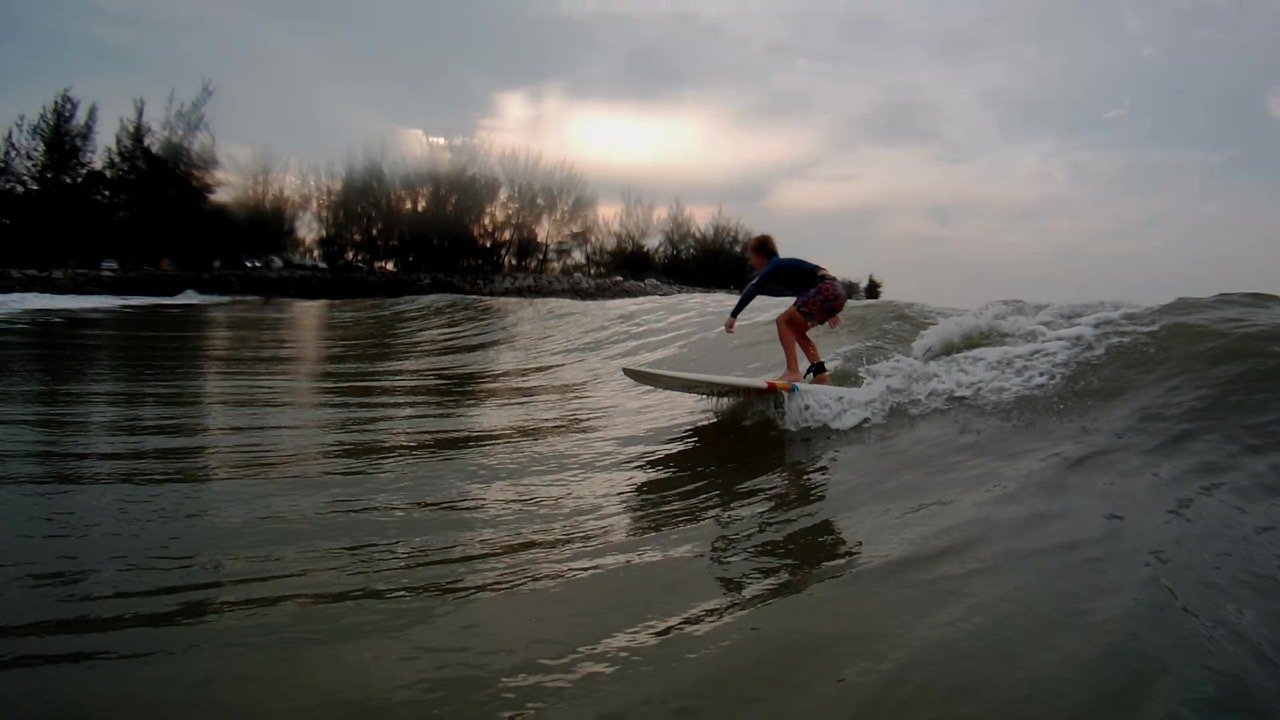
Room for a turn at Tungku Beach
Tungku Beach, Brunei — where the real surfing began (and yes, there are crocodiles)
We moved from Cornwall to Brunei when Ben was six. I had no idea what the waves would be like. What I found was an empty beachbreak, a handful of the friendliest surfers I've ever met, and the perfect place to push a kid into his first green waves. Oh, and saltwater crocodiles in the river next door.
When we packed up our life in the UK and moved to Brunei, surf was not top of my list of concerns. I had no real idea what the ocean would offer — Brunei isn't exactly on the surf map — and I'll be honest, I wasn't expecting much. I packed the foamie just in case. And on a hunch, I'd just bought Ben a 5'4 shortboard before we left, knowing that getting hold of decent equipment in Brunei once we arrived would be next to impossible.
For the first few months, the hunch seemed misplaced. The sea was flat. We were new to a new country, finding our feet, and the board sat in the corner gathering dust.
Then November arrived.
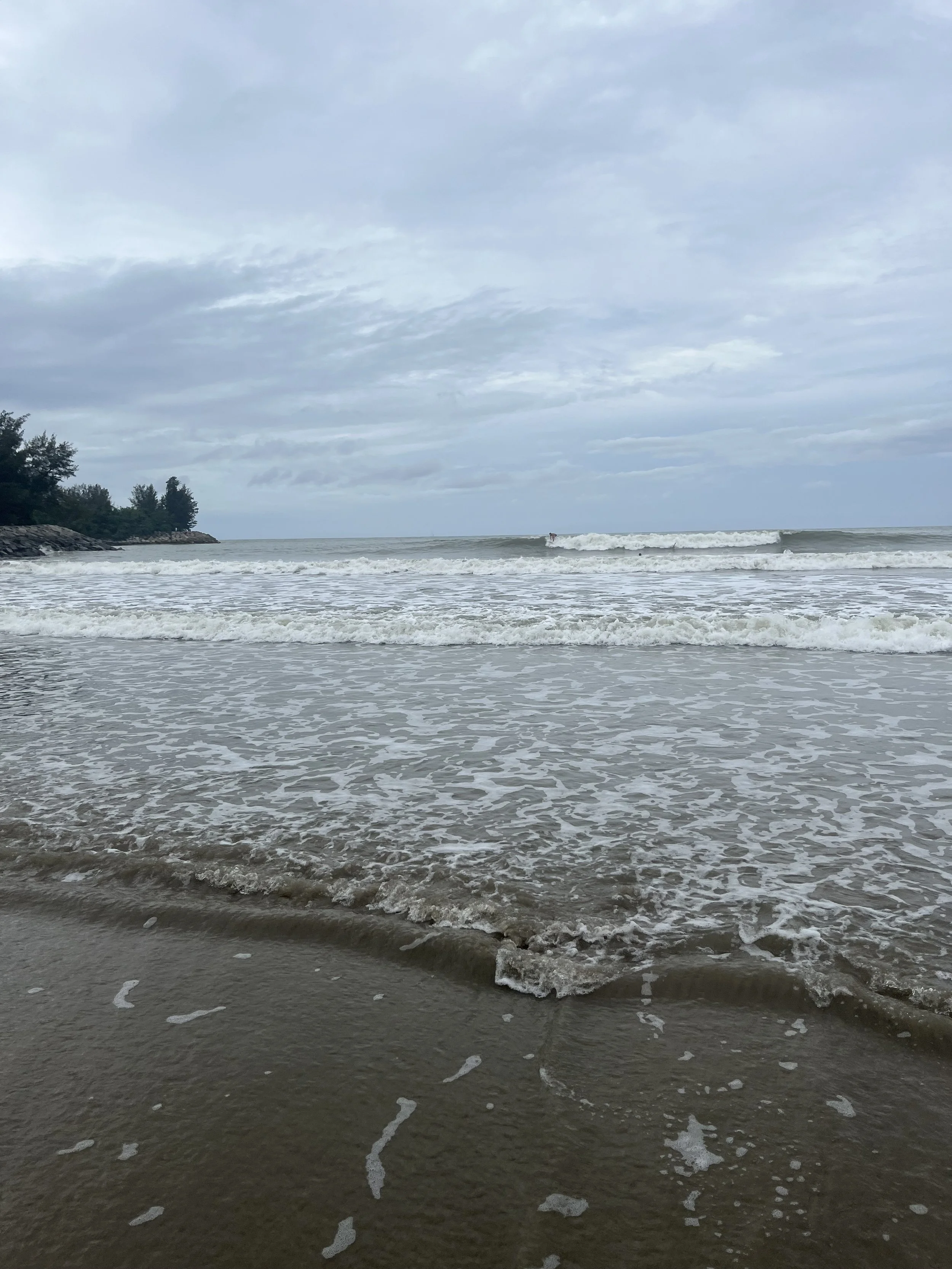
Waves in Brunei
A secret nobody told us about
The swells started coming through every couple of weeks. Nothing huge — often smaller and softer than what we'd grown up with in Cornwall — but there was something those Cornish waves could never offer: the place was completely empty.
Tungku Beach became our home break. The local surf scene at the time numbered about five people. Five. And every single one of them was welcoming in a way that's rare anywhere in the surfing world — genuinely glad to see a new grom and his dad paddling out, cheering Ben on from the water, giving him space on waves without being asked.
For a six-year-old learning to read green waves for the first time, this was everything. No crowds meant freedom. Freedom to pick the right wave without anyone dropping in. Freedom to get it wrong without an audience. Freedom to paddle back out at whatever pace we needed without feeling like we were in anyone's way.
Ben was in his shorts, catching waves until my arms gave out. Every session a little more confident than the last. The happiness on his face after each ride — that specific glee that kids have when something clicks — was so evident that even writing this now I can picture it exactly.
The push
This is the stage I described in the introduction to this blog — and Tungku is where I lived it most fully. Standing waist-deep, reading the sets coming through, timing the push so Ben caught the wave at exactly the right moment. Watching him go. Waiting. Then collecting him at the end of the ride, turning him back around, and helping him paddle out to do it all again.
It sounds simple. It's one of the best things I've ever done with my time.
The break can pack a punch on its day — proper wipeouts, straight onto the sand, and occasionally bits of driftwood washed down from the jungle to dodge on the way in. Ben had to learn quickly that the ocean doesn't always cooperate, and that coming up after a hard one and paddling straight back out is just part of it. He learned that at Tungku.
A note on the crocodiles. Brunei is home to saltwater crocodiles. They live in the rivers. The locals always assured me it was safe — and to be fair, nobody ever seemed to see one when there was surf running. I have, however, seen plenty in the river. Make of that what you will. We kept surfing.
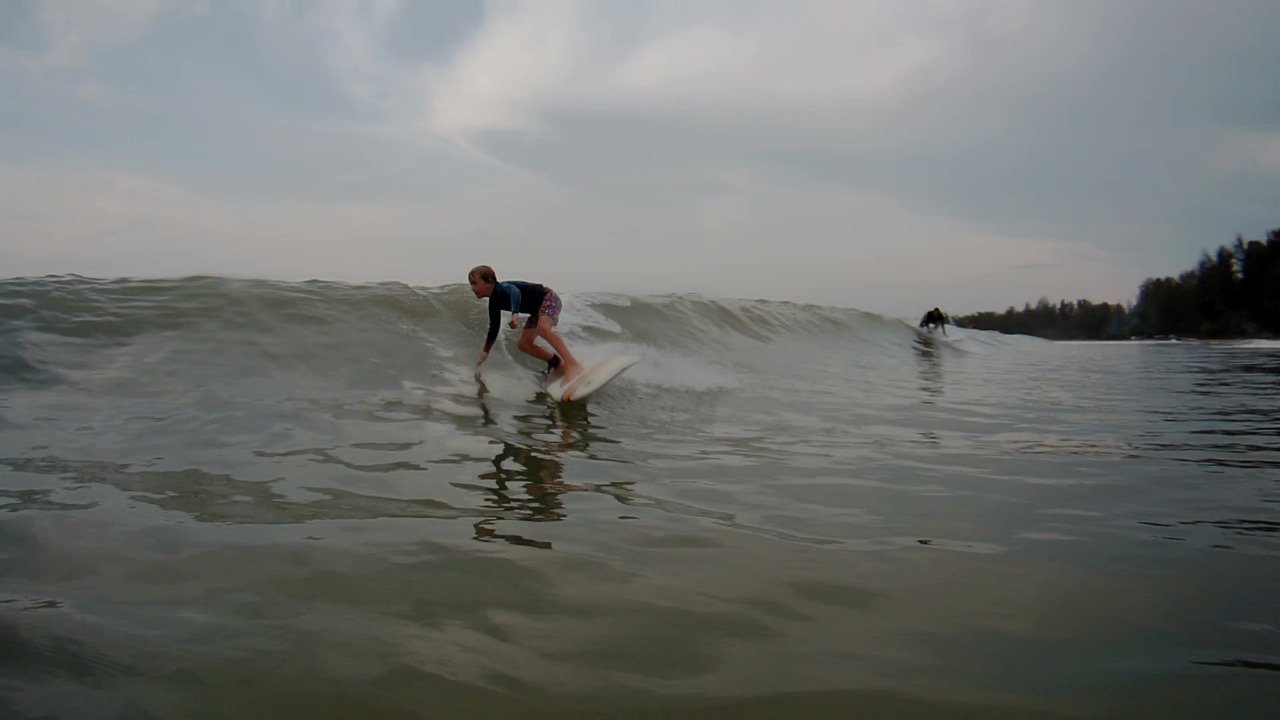
Ben after a helping hand to line up a nice little right hander.
The moment I knew
Over the next few years, Tungku became the constant between all the bigger trips. Between Sri Lanka and the Philippines and the Maldives, there was always Tungku — reliable, uncrowded, ours. The surf population has grown since those early days, from about five regulars to maybe fifteen. But there are still sessions when it's just the two of us out there, hooting at each other across the water, laughing at wipeouts, completely in our own world.
One session stands out above all the others. The day Ben paddled back out to me with a look on his face I hadn't seen before — different from the usual grin. Quieter. Like something had just happened that he was still processing.
He'd got his first barrel.
He didn't say much. He didn't need to. I knew in that moment that the boy was properly hooked, that the foamie and the whitewash and the cold Cornish mornings and all those pushes at Tungku had led somewhere real — and that there were going to be a lot of adventures to come.
Sri Lanka with a seven year old — surf, safari, and a fisherman called Podhi
This wasn't just a surf trip. It was a family holiday that happened to have some of the best parent-child waves we've ever found — and it ended with a butter fish, a handline, and a BBQ at a local fisherman's home that our whole family still talks about.
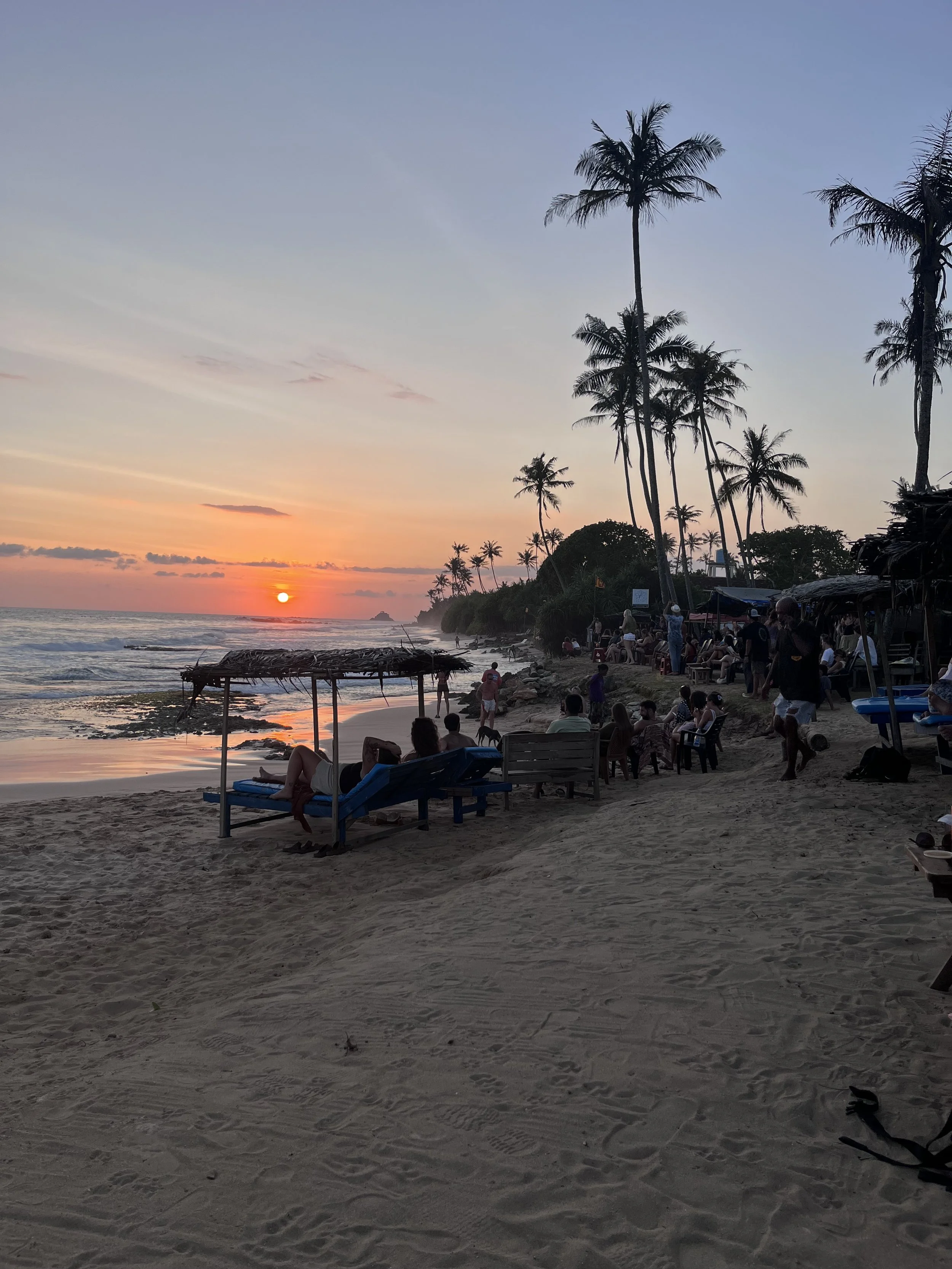
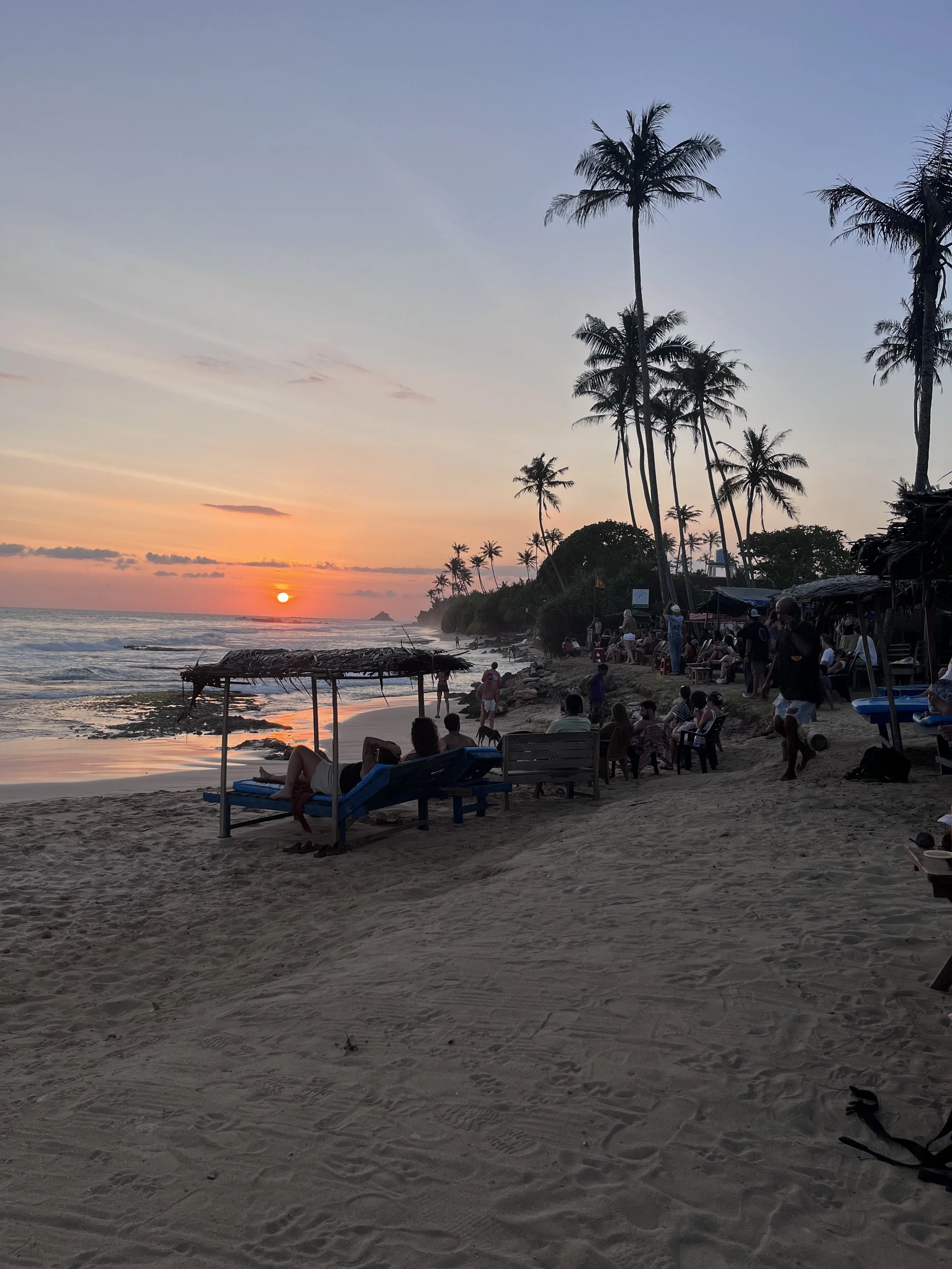
Sunset at the bar
This wasn't just a surf trip. It was a family holiday that happened to have some of the best parent-child waves we've ever found — and it ended with a butter fish, a handline, and a BBQ at a local fisherman's home that our whole family still talks about.
Ben was seven when we first went to Sri Lanka. He was deep in the push stage — still needing me in the water beside him, reading the sets, timing the shove into the wave, collecting him at the end of each ride. We'd been doing it at Tungku in Brunei for a year by this point and he was confident in small surf. Sri Lanka, I suspected, might offer something a little different.
I was right — and it was exactly what he needed.
Getting there — the overnight stop at KLIA2
Travelling from Brunei to Sri Lanka means a transfer through Kuala Lumpur, though Sri Lanka is reachable from other destinations too so your routing will depend on where you're based. If you do connect through KL, rather than rush a connection we stayed overnight at the Tune Hotel at KLIA2 — basic, comfortable, and most importantly right at the airport. If you're transiting through KL with boards and small children, don't try to get into the city. KL centre is a good half hour by train and it's never easy with luggage and surfboards in tow.
One genuinely useful tip: there's a luggage storage service at KLIA2 — next to domestic arrivals on the ground floor and also on level 2. Leave your boards and bags there, check into the hotel light, and collect everything in the morning. Makes the overnight stop far less stressful.
Where we stayed — Lions Rest, Gurubebila
We stayed at Lions Rest near Weligama on the south coast. The location is everything — away from the busy coastal road that runs through Weligama town, set right in front of the beach. We could see the surf from the balcony. For a family with young children it was ideal: a swimming pool for when the ocean was too much, transfers arranged directly through the hotel, and the kind of relaxed pace that makes a holiday actually feel like a holiday.
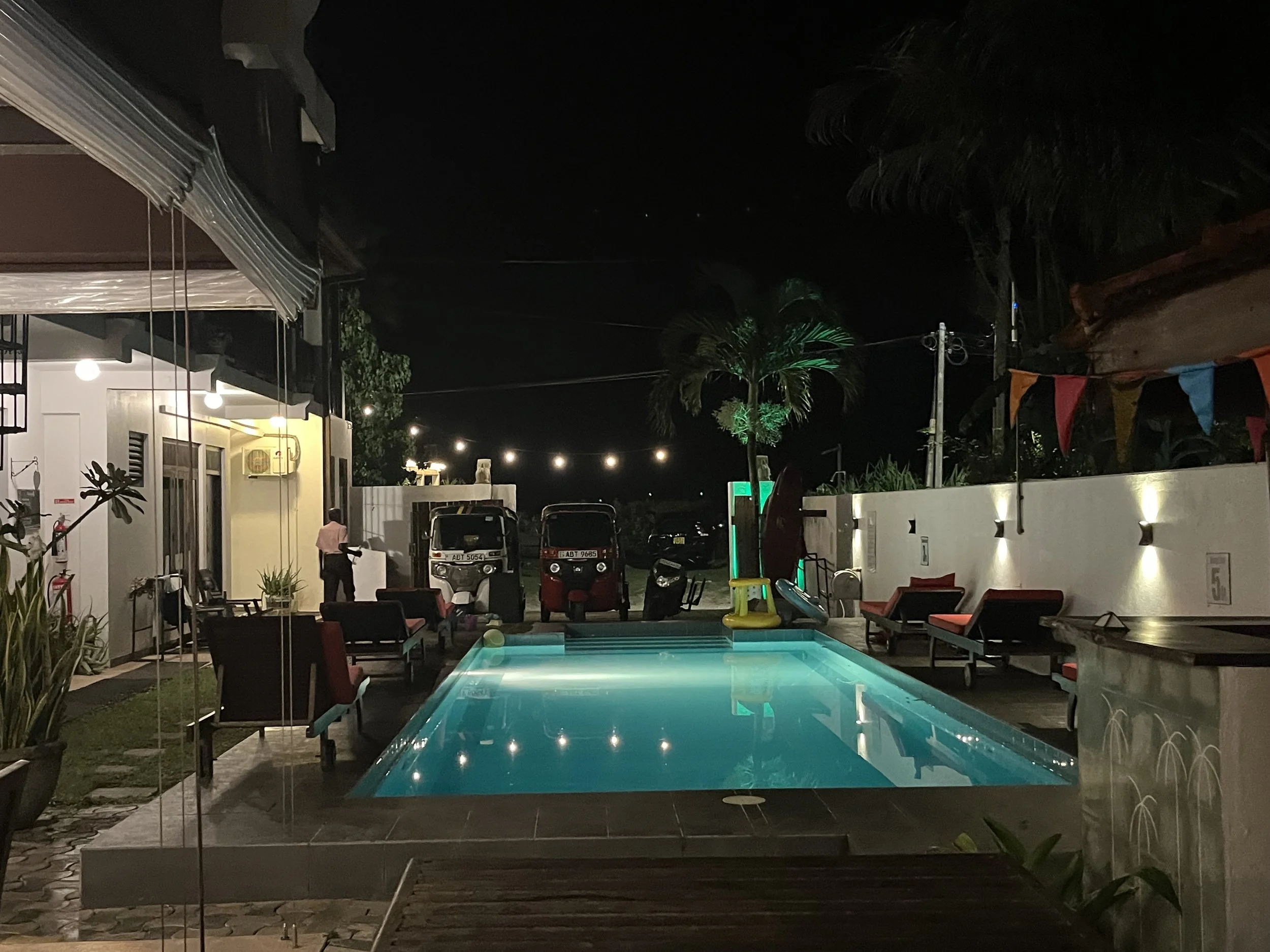
Gurubebila as a base keeps you close to multiple breaks without being in the thick of the more crowded Weligama scene. That matters when you're travelling with a young surfer.
The surf — finding the right waves for a seven year old
The closest break to where we were staying is Coconuts — a quality wave on its day, but too much for Ben at that stage. I surfed it early most mornings before the family was up. Get your own surf in first. You'll be more present, more energetic, and better company for it.
For Ben's sessions we went to Jungle Beach and Fisherman's Reef. For parents looking for a wave of their own, Rams, Lazy Left and Kabalana are all close by and well worth it.
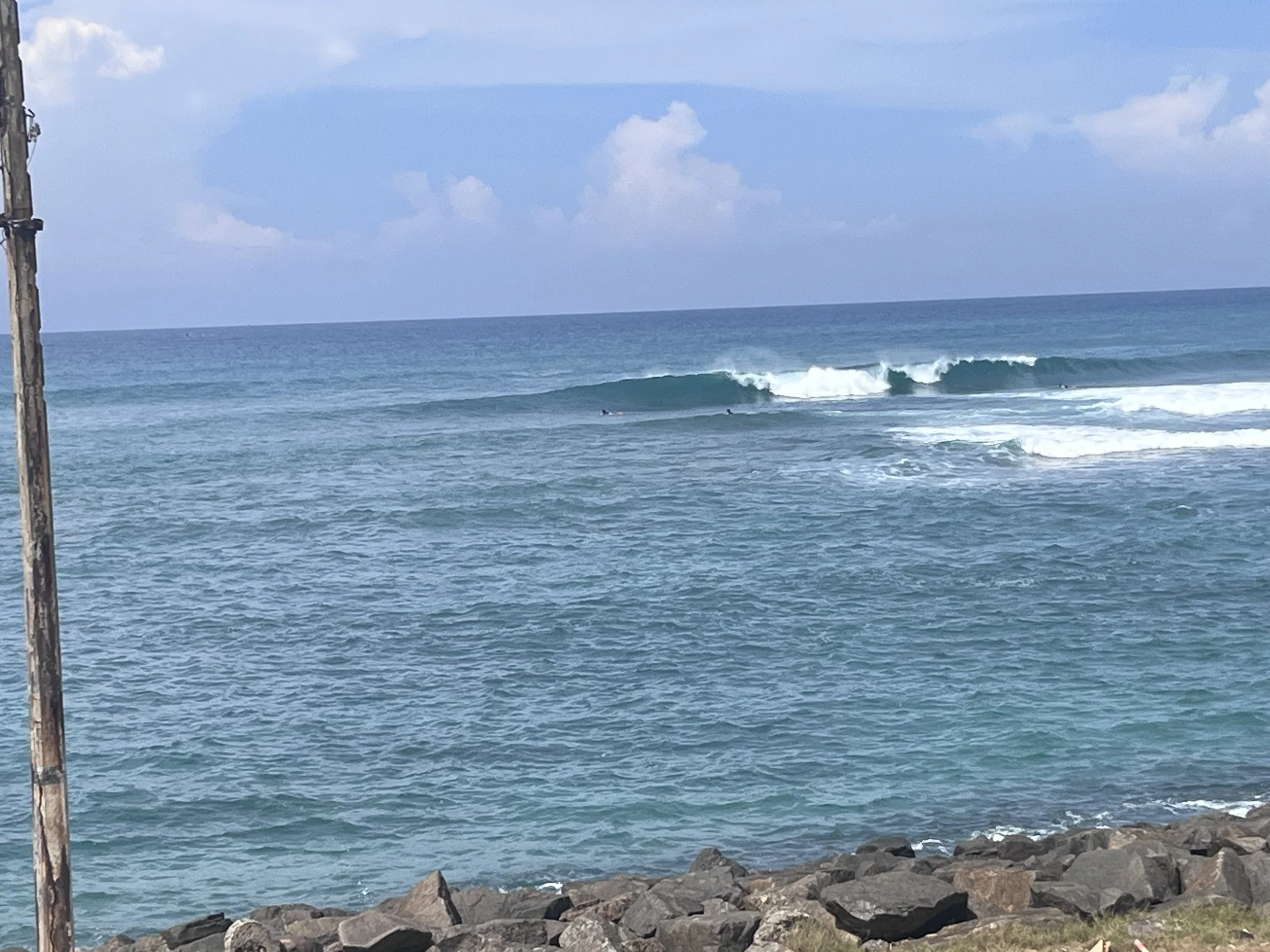
Waves at Rams
All of these breaks offer something that's surprisingly hard to find at a lot of surf destinations: waves with a little more shape and character than your average learner wave, without being enough to unsettle a young surfer. The reef gives the waves more form than the beachbreaks Ben was used to — longer rides, proper faces — and sitting wide and being patient meant we could pick the gentler ones. Ben was on his shortboard by this point and the extra shape in the waves suited him perfectly. He came out of the water every session buzzing.
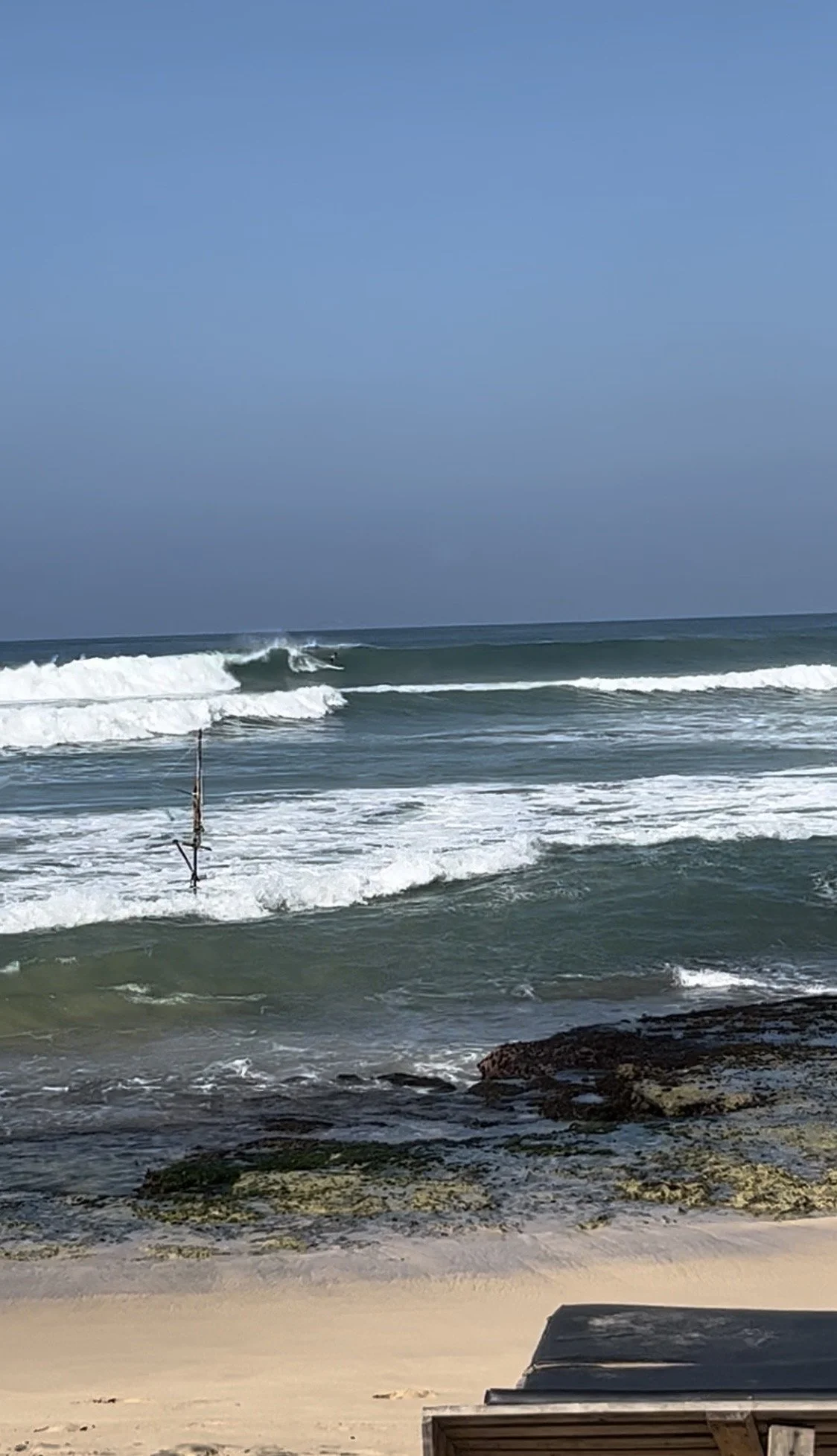
Going left at Coconuts
Practical notes for surf parents: Wind picks up through the day here so morning sessions are almost always better — get in the water early. At lower tides on smaller days reef boots are worth having to protect feet on the shallower sections. A hooded rash vest is a good call too — the sun is strong and you'll spend hours in the water. Bring all your surf gear from home. Surf shops in the area charge a lot for basics like wax and leashes — don't rely on picking things up when you arrive.
The local families — Lucky, Kilana, and Podhi
The thing about Gurubebila that no guidebook really captures is the local community. The families here are genuinely, warmly welcoming in a way that goes beyond the hospitality you find at tourist-facing businesses. Lucky and Kilana — tuk tuk drivers who seem to know everyone and everything in the area — became our guides, fixers, and friends within about twenty four hours of arriving. Lucky also runs a surf school and is an ISA qualified coach, so if your child wants proper instruction alongside the fun sessions, he's your man. If you stay in the area, find them.
But the moment that defined the trip happened on the rocks near the shore one evening. A friend came across a local fisherman called Podhi wrestling a butter fish from the sea using nothing but a handline — jumping from the rocks into the water, acting as a human sea anchor, letting the fish tire itself out against his weight until he could bring it in. One of the most extraordinary things any of us had heard about.
What followed was one of those travel experiences that you can't plan and can't replicate — Podhi showing Ben traditional fishing techniques, letting him have a go with the handline, and then an invitation back to his home for a fish BBQ with his family. The kind of evening that costs nothing and stays with you for the rest of your life. Our whole family still talks about it.
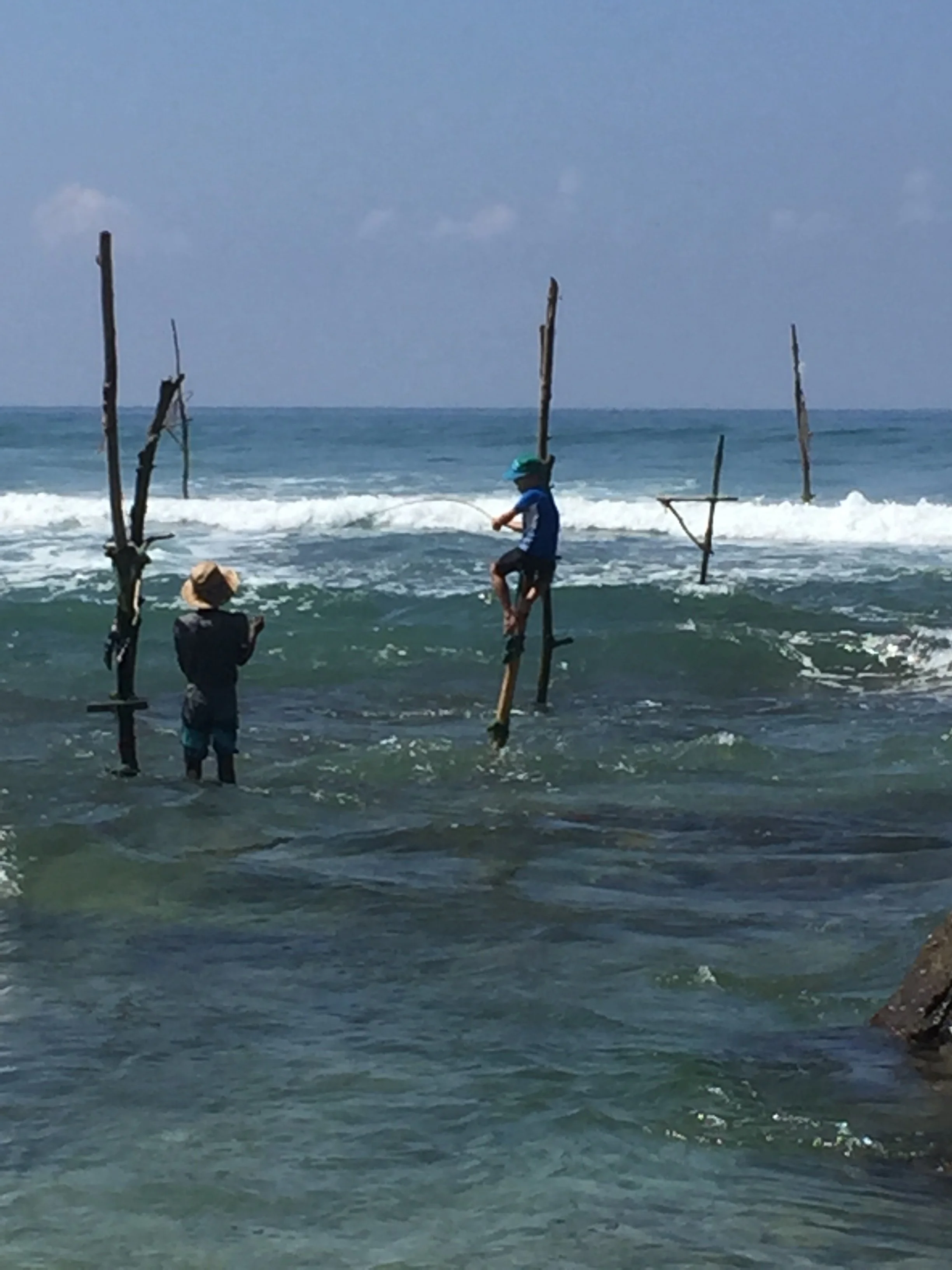
Ben fishing the traditional way with Podhi.
Beyond the surf — a proper family holiday
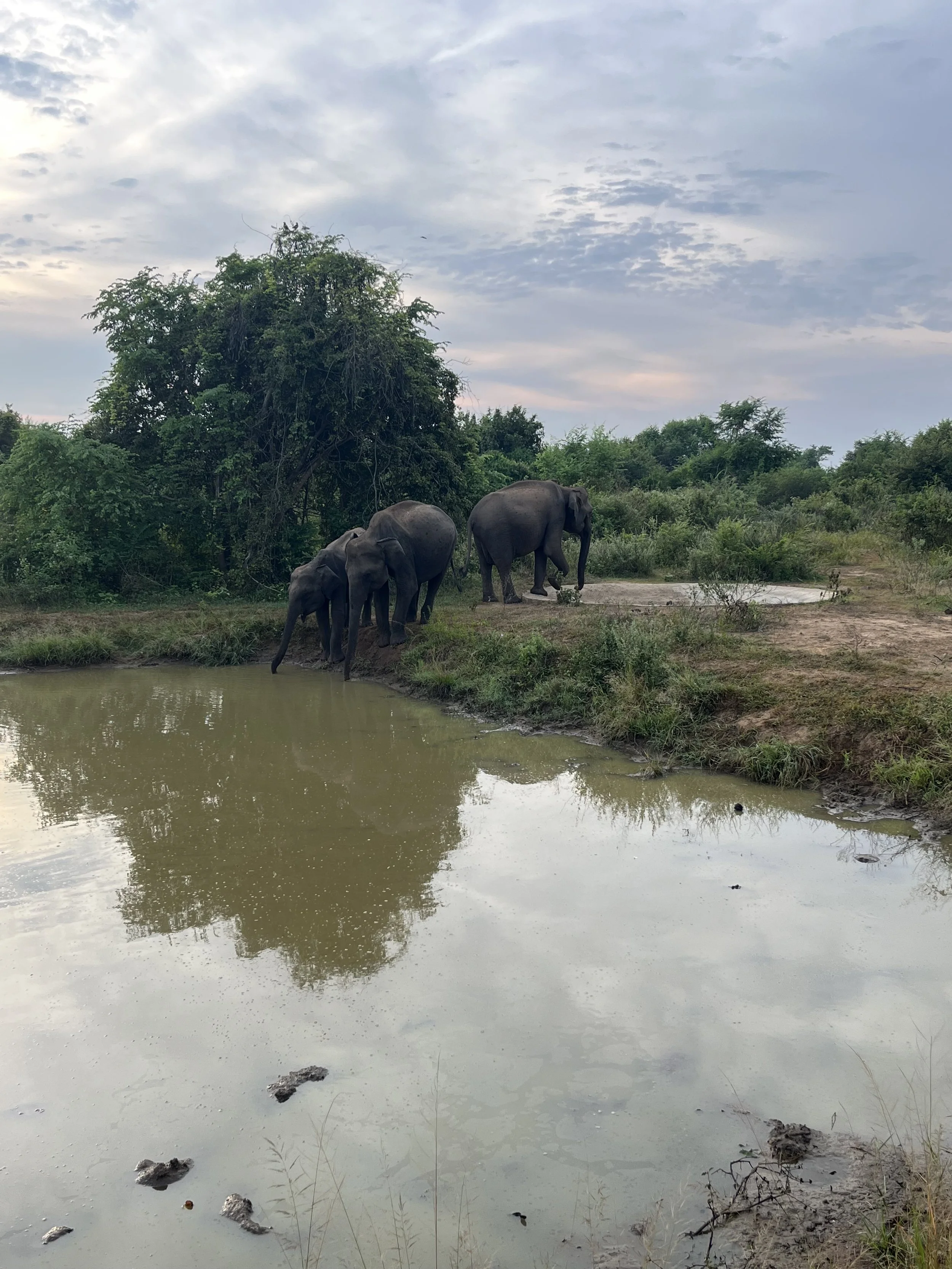
Elephants at Udawalawe National Park
Sri Lanka rewards the family that treats it as more than a surf destination. We did a safari at Udawalawe National Park — elephants, crocodiles, water buffalo, and a leopard footprint in the mud that was close enough to make everyone look twice. We caught a train down to Galle, walked the Dutch fort ramparts, and watched cricket being played on the green below. We snorkelled with turtles. We played cricket with local kids on the beach.
My wife and daughter had as good a holiday as Ben and I did. That balance — where the surf parent gets their waves and the rest of the family gets a genuinely brilliant trip — is rarer than you'd think, and Sri Lanka nails it.
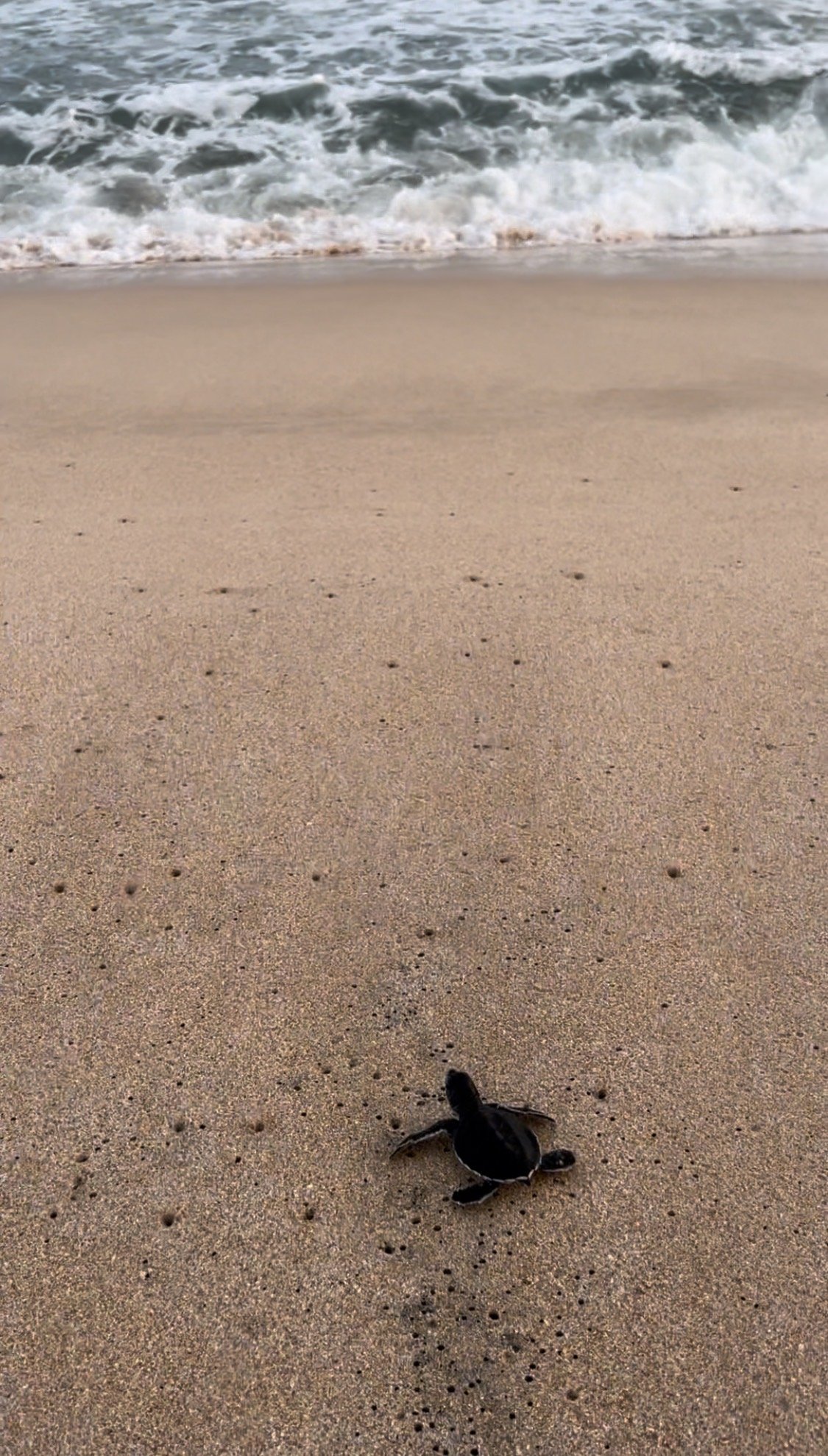
Turtle making its way to the Indian Ocean
Would we go back?
We've been back twice since that first trip. That's the answer.
The practical bits
Getting there — Multiple routing options. If via KL stay overnight at Tune Hotel KLIA2 and use the luggage storage on level 2.
Surf for kids — Jungle Beach and Fisherman's Reef. Sit wide of the peak, surf mornings.
Surf for parents — Coconuts, Rams, Lazy Left, Kabalana. Surf early before the family wakes up.
Surf school — Lucky is an ISA qualified coach and runs lessons locally. Find him.
Kit tip — Bring everything from home. Reef boots, hooded rash vest, wax, leashes.
Don't miss — Udawalawe safari, train to Galle, snorkelling with turtles, finding Lucky and Kilana.
Sunset drink — Beach bars in front of Coconuts. Best spot for a cold one at the end of the day.
Budget — Good value. Didn't break the budget and built memories that last.
Best for — Young shortboarders ready for their first reef break experience.
After three trips — what we know now
Where to stay
Lions Rest — Our first choice. Beachfront, pool, family friendly, great location.
Coconut Surf Inn — Good alternative, well placed for the breaks.
Coco Reef Retreat — Also worth considering, doubles as a good spot for food.
Where to eat
Blue Porch — Best for breakfast and lunch with a great view of Rams.
Zippi — Amazing sandwiches and coffee.
Jamu — Healthy food and juices, close to Coconuts.
Surfing Wombats — Best pizza in the area.
Abrazo, Ahangama — Best Mexican around. Worth the short trip.
Indigo, Ahangama — Great Indian food.
Coconut Surf Inn — Good food as well as accommodation.
The food scene here is developing fast — new spots keep appearing and it gets better every time we visit.
How to get around
Use the local tuk tuks or get a train.
You can hire a bike if you have an international licence.
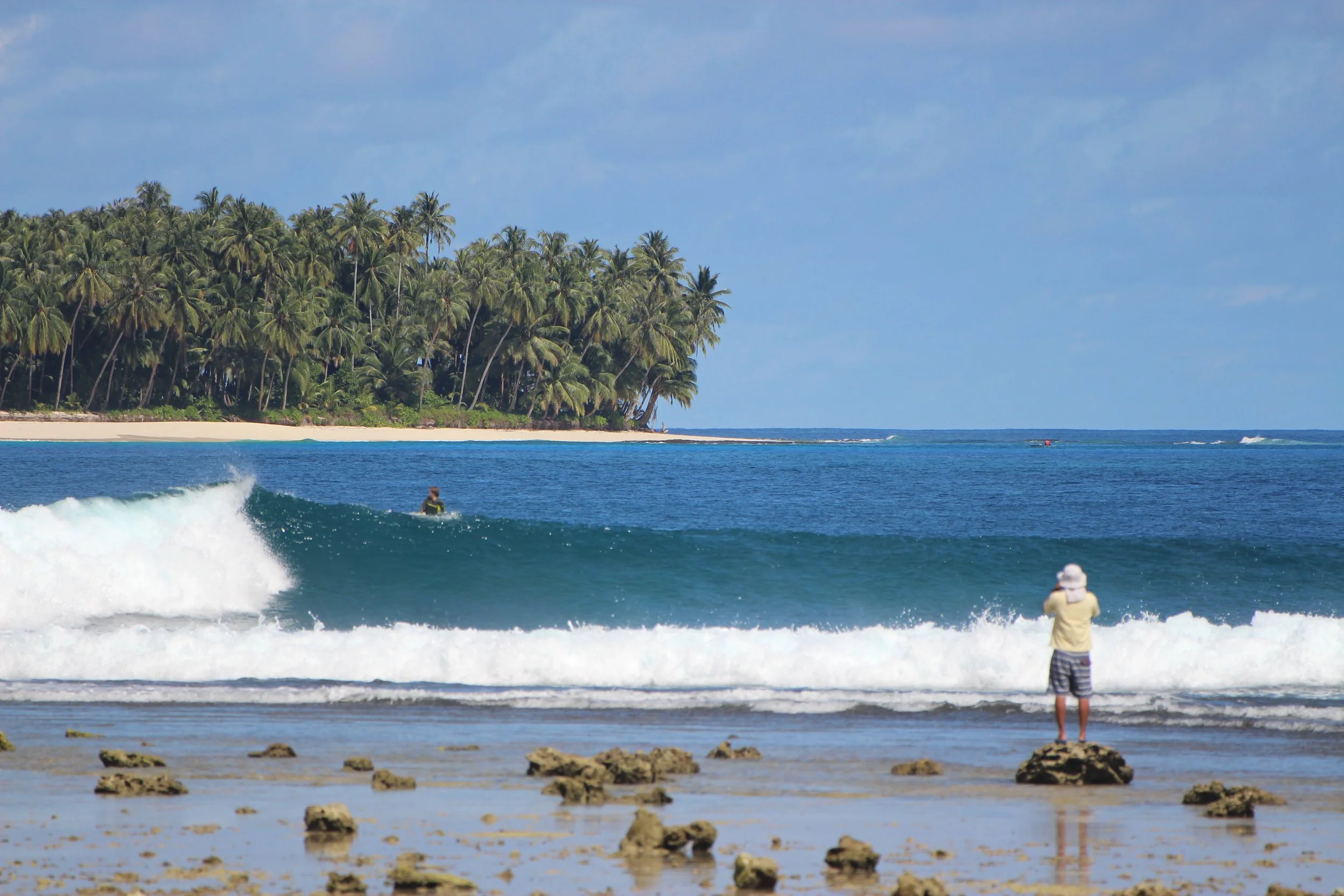
The Telo Islands, Sumatra — no electricity, karaoke at 2am, and the best surf trip we've ever done
Like everyone else, Covid put the trips on hold for a couple of years. When we finally got back in the water together properly, Ben was twelve — and something had changed. This is the trip where we found out what.
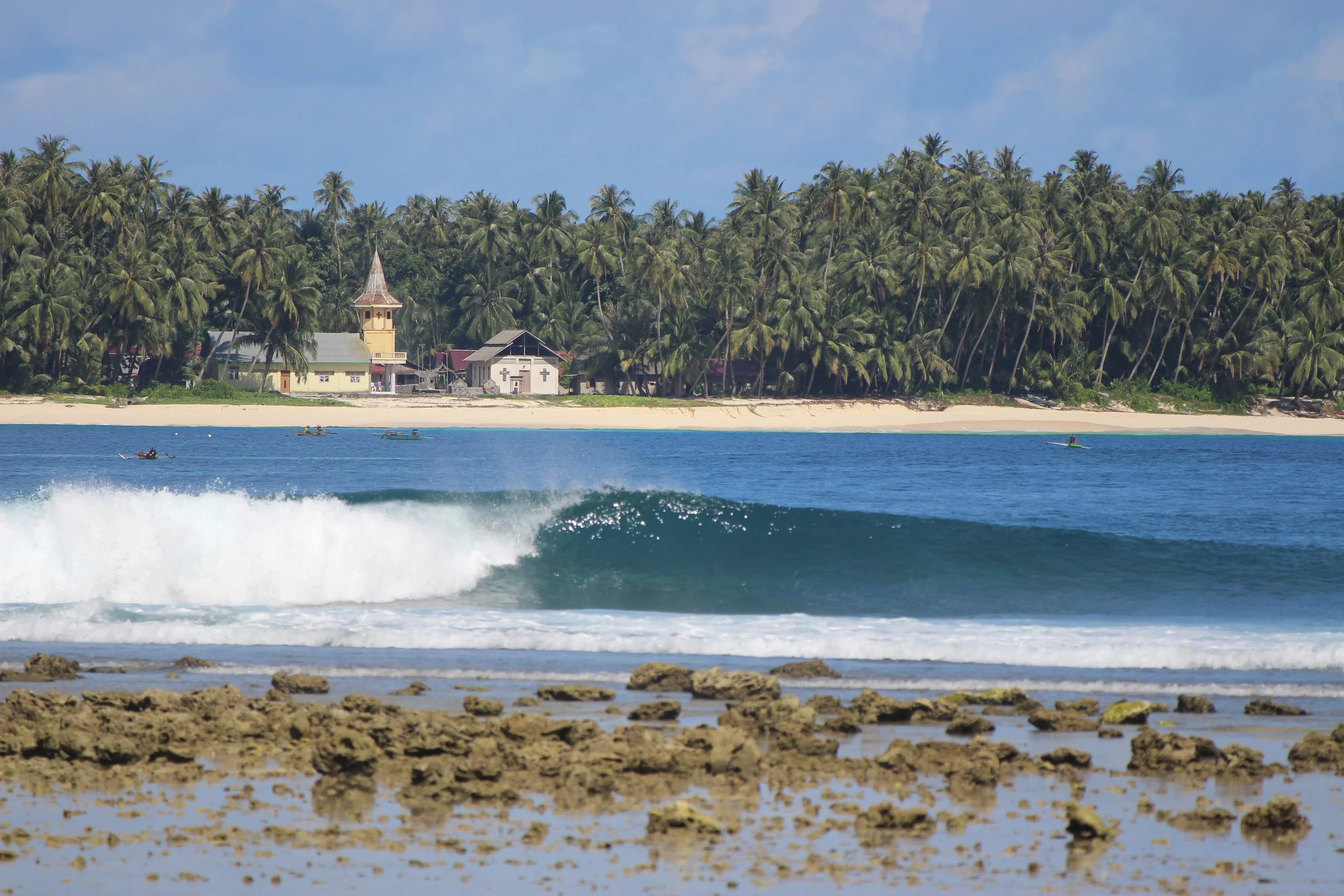
An Island Paradise
Like everyone else, Covid put the trips on hold for a couple of years. When we finally got back in the water together properly, Ben was twelve — and something had changed. This is the trip where we found out what.
The Telo Islands are not easy to get to. That's entirely the point.
We went with a few of my mates — a group of us who simply wanted an adventure. Ben came too, keen to experience something properly remote for the first time. Two weeks, no itinerary, no guarantees. Just waves, fishing, rice and eggs, and whatever the ocean decided to serve up.
Getting there — Medan, Nias, and a chartered speedboat
The routing goes KL to Medan, overnight at the airport hotel in Medan, then a flight to Nias. We had a couple of days at Lagundri Bay first — home of the famous right hander, one of the most celebrated waves in Indonesia. It was small when we were there but that didn't matter. Ben paddled out on his own, no push needed, reading the lineup and finding his spot. Being a natural footer he took to Lagundri immediately and gravitated naturally towards where the local groms were surfing, sharing waves, figuring out the pecking order. The nerves were visible — Lagundri packs a punch even when it's small — but he handled it. We stayed at Raffiels, who had picked us up from the airport. Basic, friendly, exactly what you need.
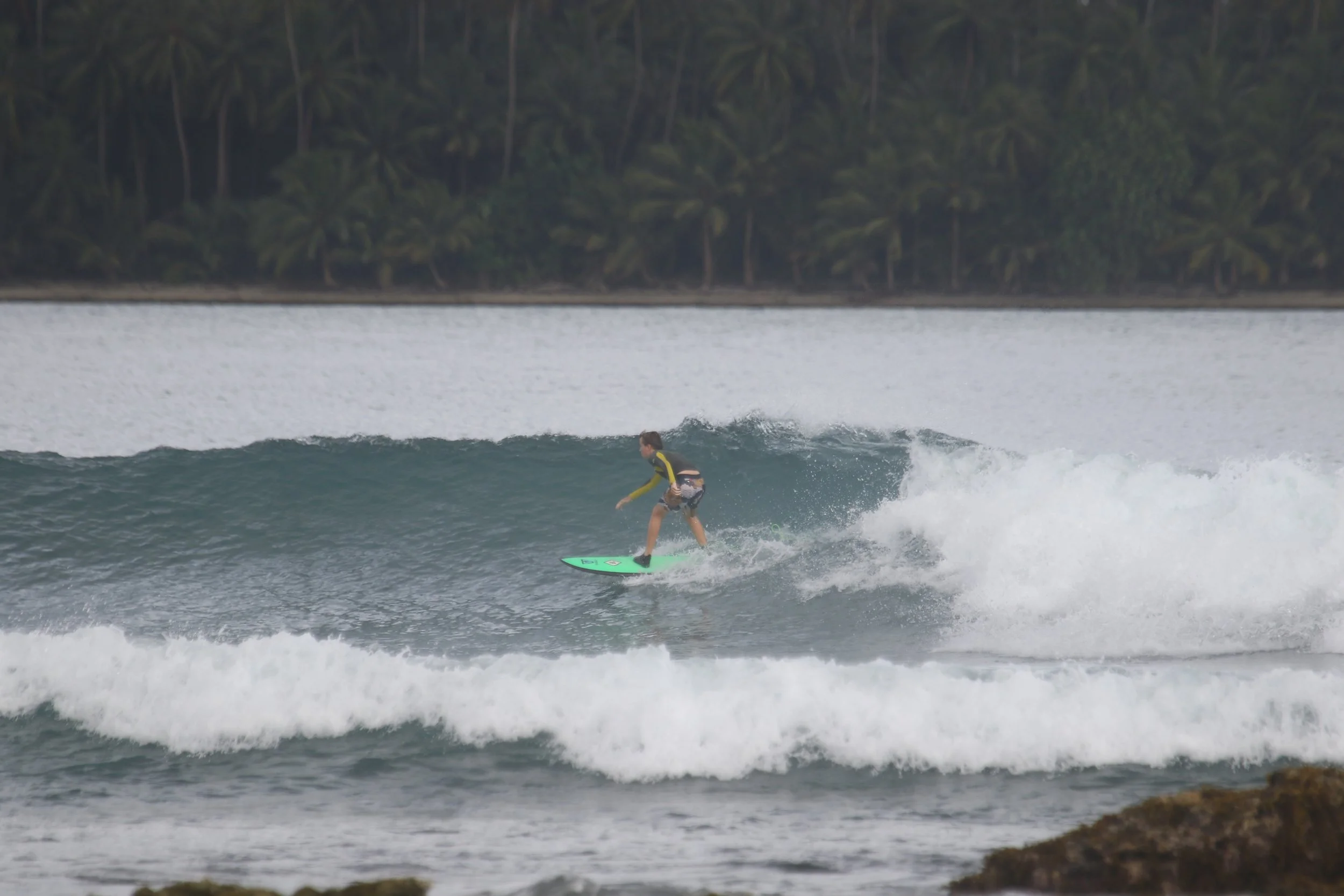
Ben at Lagundri
The ferry from Teluk Dalam to the Telo Islands had been cancelled. We could wait, or we could charter a speedboat. We chartered a speedboat. The next morning we were gliding across crystal clear water under blue sky heading into the middle of nowhere, and it felt exactly like it should.
Telo Island Surf House — back to basics
Our host Andreas had arranged everything — the boat, the accommodation, the daily surf missions. He is one of those people who makes a trip. Knows every break in the region, reads conditions better than any forecast, and runs the place with a warmth that makes a collection of strangers feel like one group within about twenty four hours.
The accommodation is basic. No electricity except for a couple of hours each night from a generator. No menu of luxury options. No air conditioning. There was an Australian couple staying at the same time who became great company — before long we were one big family sharing a homestay in the middle of the ocean, playing shithead card games in the evenings, passing a guitar around, washing down rice and eggs with luke warm Bintang.
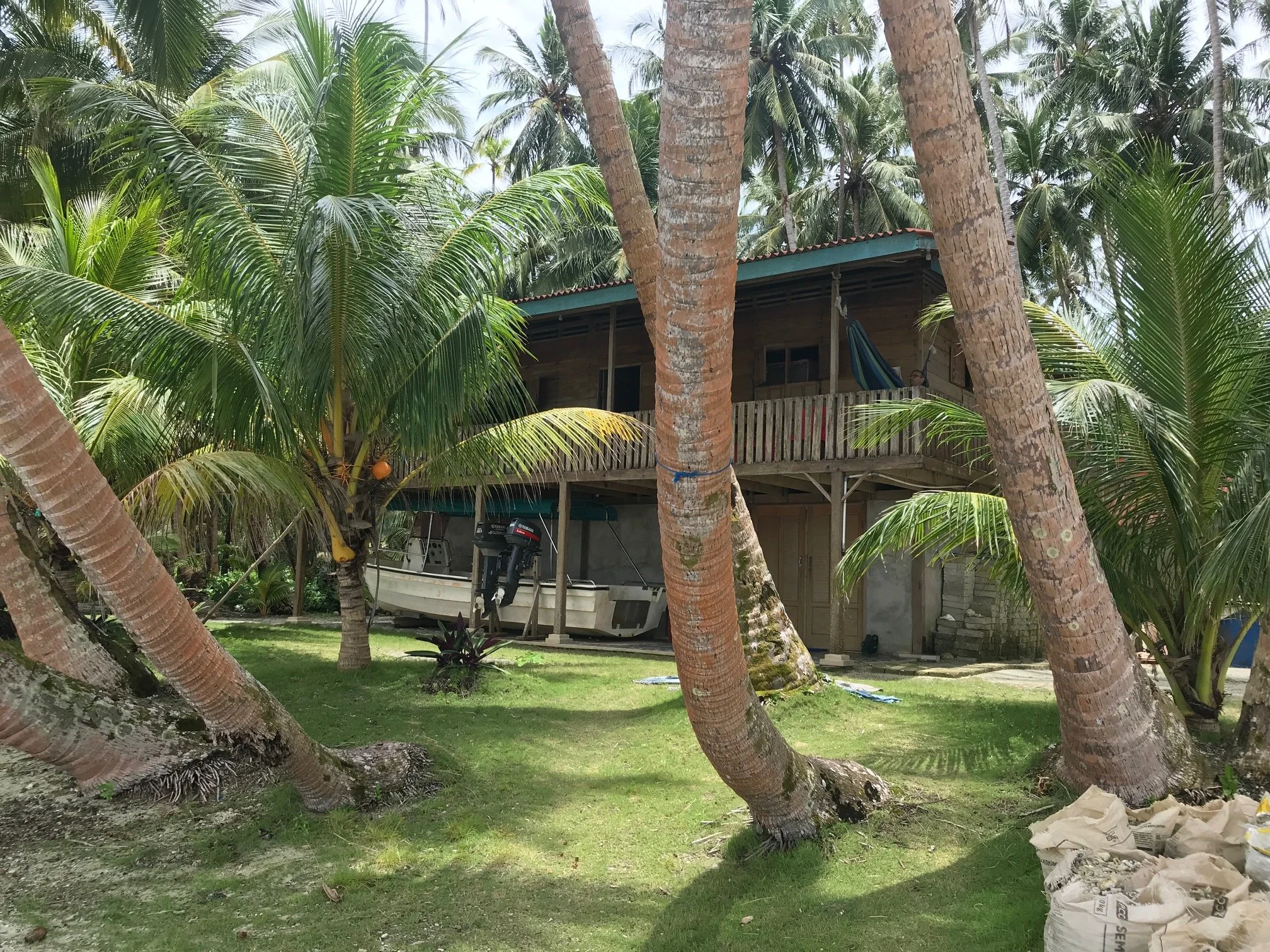
Telo Island Surf House
It reminded me immediately of trips I'd done to the Mentawais when I was at university. The same rawness, the same sense of being completely cut off. I'd wanted Ben to experience this — to get away from technology and the modern world and just surf, fish, and be present. This is how surf trips used to be. Most surfers now will never know it.
A word on the realities: Bring ear plugs — the local village has an inexplicable abundance of karaoke machines and K-pop at 2am is not what you want the night before a good swell. Doughnuts are served for breakfast and are genuinely excellent for the first six days. By day seven Ben had stopped eating them entirely, at which point fishing became less of a hobby and more of a necessity. There is malaria in the Telo Islands — you can take anti-malarial tablets, but our approach was simply to not get bitten. Apart from the first night, this worked. Check your mosquito net before you close it, not after.
A word on the realities: Bring ear plugs — the local village has an inexplicable abundance of karaoke machines and K-pop at 2am is not what you want the night before a good swell. Doughnuts are served for breakfast and are genuinely excellent for the first six days. By day seven Ben had stopped eating them entirely, at which point fishing became less of a hobby and more of a necessity. There is malaria in the Telo Islands — you can take anti-malarial tablets, but our approach was simply to not get bitten. Apart from the first night, this worked. Check your mosquito net before you close it, not after.
The wave — Churches/Misho's
The break right out front is a long fun left called Churches, or Misho's. It is the most consistent wave in the mid to north Telos region — breaking on all tides, surfable from waist high to well overhead, and suited to everyone from intermediate surfers to pros. Take off deep for long walls and fast sections with the occasional barrel. Sit a little wider and you get a peakier wave with more room for turns and cutbacks. Ben was in and out of the water all day, every day, as often as his energy allowed — which was considerably more often than anyone else's.
We had small surf for most of the trip with the odd overhead day thrown in. For Ben it was perfect — enough power and variety to push him without overwhelming him. He was handling reef breaks properly for the first time, competing for waves with boat charter guests who'd come a long way to surf them, reading different conditions every session. You could see him growing as a surfer in real time.
Andreas had a boat and knew exactly where to go when Churches wasn't firing. Pinnacles, Rangga's, Kindies, Mousetraps — there are breaks everywhere out there and Andreas knows the right conditions for all of them. Put yourself in his hands.
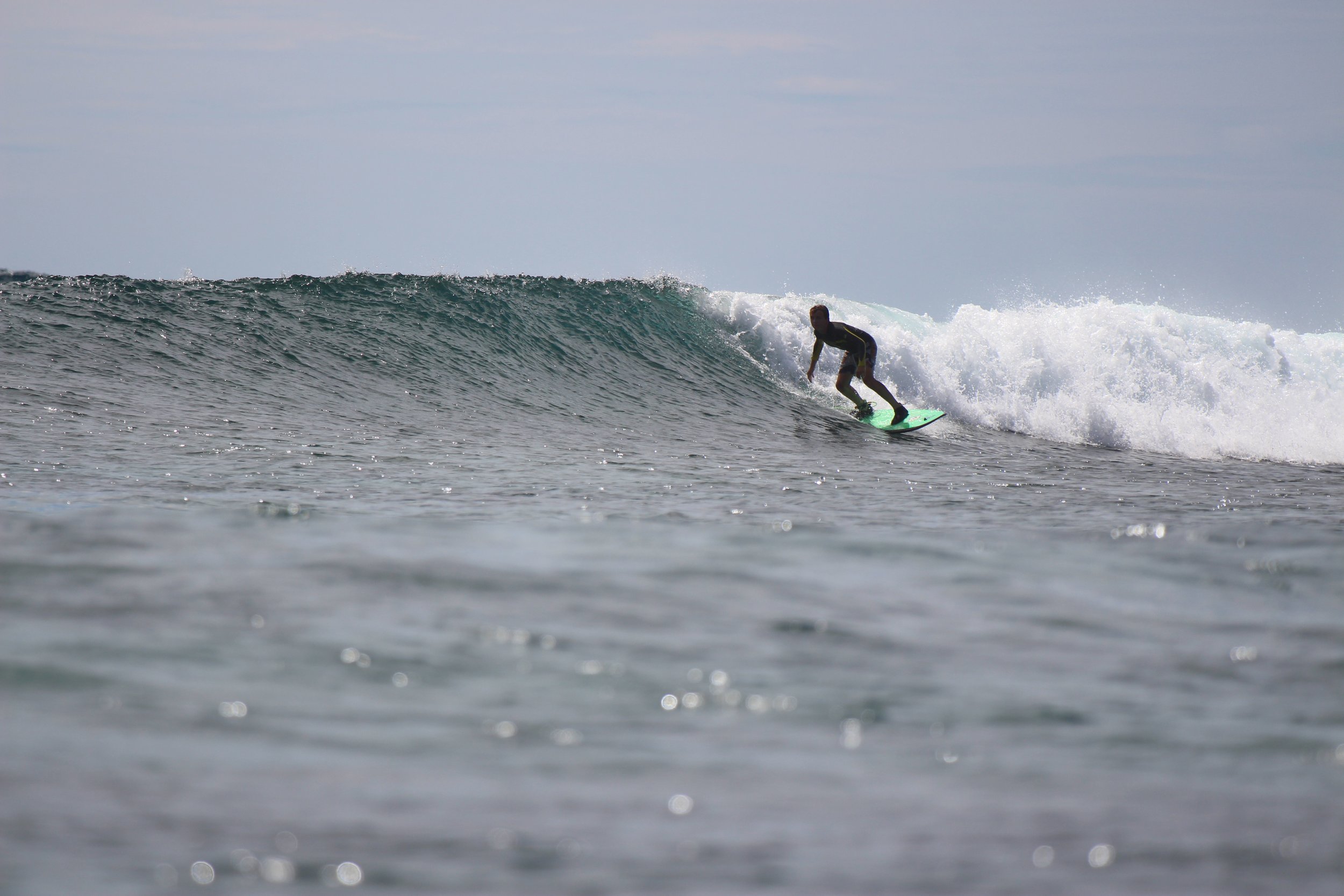
Taking off in the Telo Islands
The mosquito net
On the first night I tucked Ben into bed under a mosquito net, satisfied that he was properly protected. I woke up to find he'd been bitten everywhere — by the mosquitoes that had been inside the net when I closed it. I spent the next morning killing every one I could find. My hands were covered in blood. Ben's blood.
The malaria worry that followed was real. Thankfully all was fine. We sealed every hole in the net, double checked the repellent, and carried on. But I mention it because it's the kind of thing the glossy surf camp brochures don't tell you — and if you're taking a child to somewhere this remote you need to go in clear-eyed about what that means.
Every moment of difficulty on that trip was worth it. That's not a line — it's just true.
What made it
Surf trips are made better by the people you share them with. My colleagues and our two Australian companions were exactly the right group — the evenings were as good as the days, which is saying something.
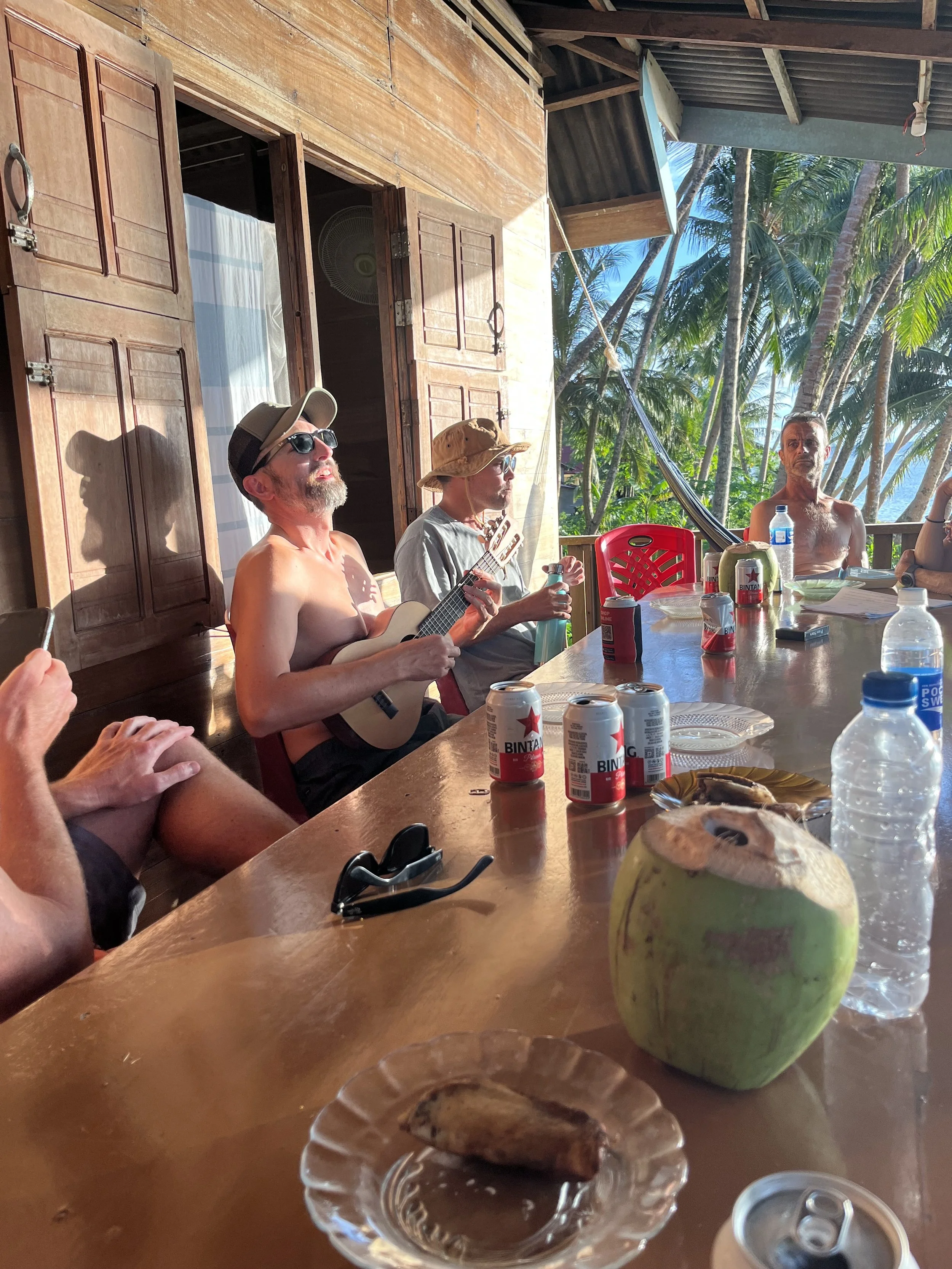
A guitar and some luke warm bintangs after a great day sharing waves.
But what made it truly special was watching Ben embrace every bit of the hardship because of how much he was getting from the surfing. The rice and eggs, the heat, the basic accommodation, the K-pop at 2am — none of it mattered because the waves were there every morning and he couldn't wait to get back out. When a twelve year old chooses waves over comfort without a second thought, you know something real is happening.
With no phone signal and no wifi, evenings meant books and card games — and Ben rediscovered both. There is something to be said for a twelve year old who finishes a novel in two weeks because there is simply nothing else competing for his attention.
Ben came home looking, according to his mum, slightly malnourished. I put it down to being sunburnt and exhausted from two weeks of constant surfing. Both were probably right.
What he also came home with was something harder to measure. How to be around adults and hold his own. How to cope without technology or the things you usually take for granted. How to find humour in hardship. How to read a reef break lineup and compete for waves. How to be genuinely present somewhere, because somewhere this remote doesn't give you any other option.
The tough travel makes the waves better. The shared discomfort makes the friendships deeper. And the smiles at the end of a session — when you've both caught good waves on a reef break in the middle of the Indian Ocean and there's nowhere else on earth you'd rather be — those are the ones that last.
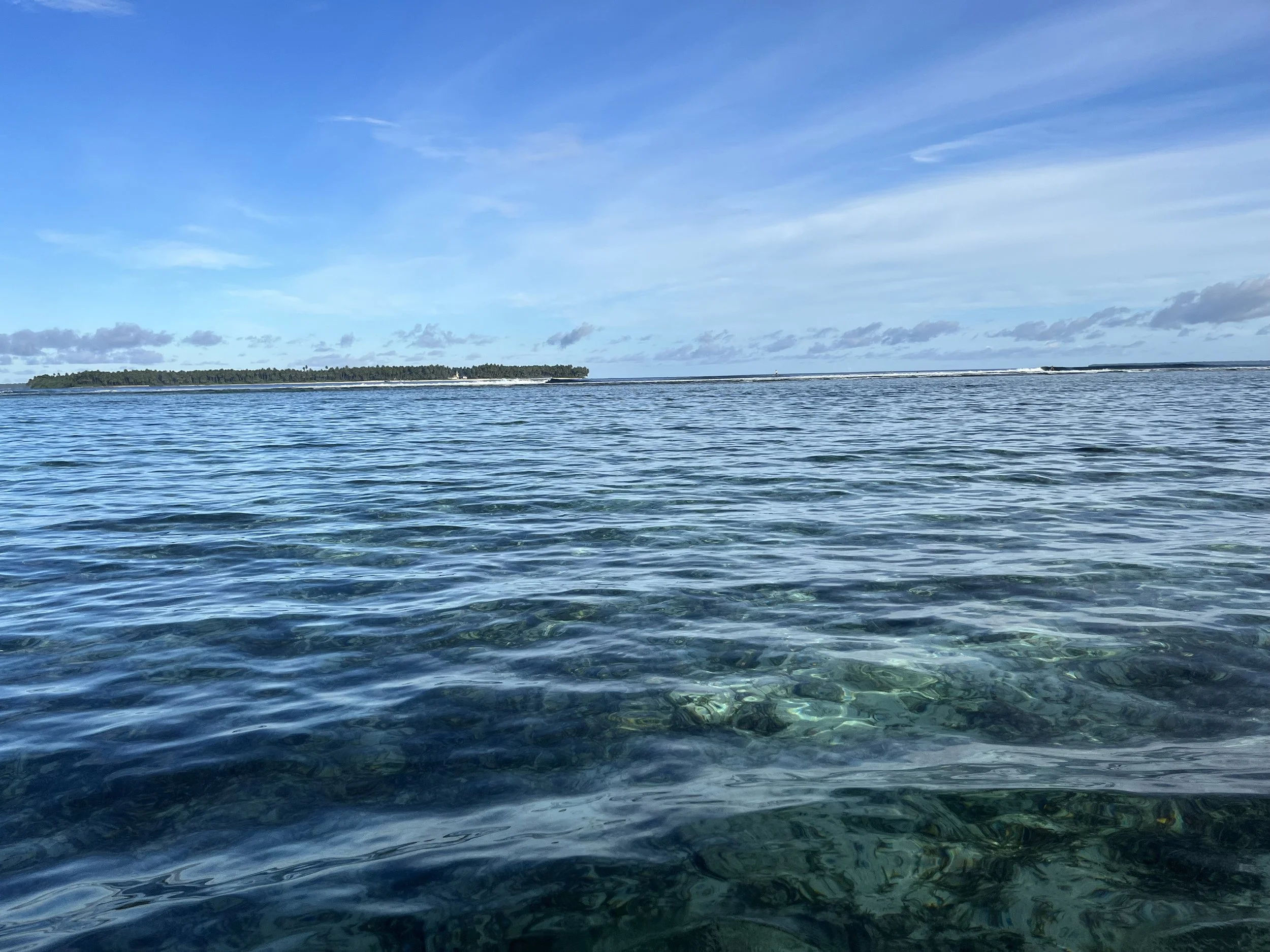
Crystal clear waters and empty line-ups make it all worthwhile.
We spent two weeks at Telo Island Surf House before heading back to Nias for a final couple of days at Lagundri. Then home.
Would we go back? Absolutely.
The practical bits
Getting there - KL → Medan (overnight at airport hotel) → Nias → speedboat or ferry to Telos
Stop en route - Lagundri Bay, Nias — 2 days minimum. Stay at Raffiels.
Where to stay - Telo Island Surf House — basic, brilliant, Andreas is the host you want
Choose your room - The two rooms at the front catch an evening breeze and are worth fighting for. The two at the back are hot sweat pits. One backs directly onto the toilet, which means you will hear every late night visit in full detail. You have been warned.
The wave - Churches/Misho's out front — consistent left, all tides, all levels
Other breaks - Pinnacles, Rangga's, Kindies, Mousetraps and many more — Andreas will take you
Boards - Bring at least two each — no surf shops out here
Kit - All surf gear, sun protection, mosquito repellent, reef boots, ear plugs
Health - Malaria present — anti-malarials an option, or focus on not getting bitten. Check your net before you close it.
Snacks - Bring extra food and fruit from home
Best for - Intermediate and more advanced surfers ready for a proper remote adventure
Lombok — two weeks, two bases, and the start of six weeks in Indonesia
Two weeks, two bases, and the start of six weeks in Indonesia. Ben was thirteen and the golden era was in full swing. From the sheltered lagoon at Ekas Bay to the reef barrels at Mawi — a complete guide to surfing Lombok with a young surfer, including where to stay, where to eat, and every wave worth knowing about.
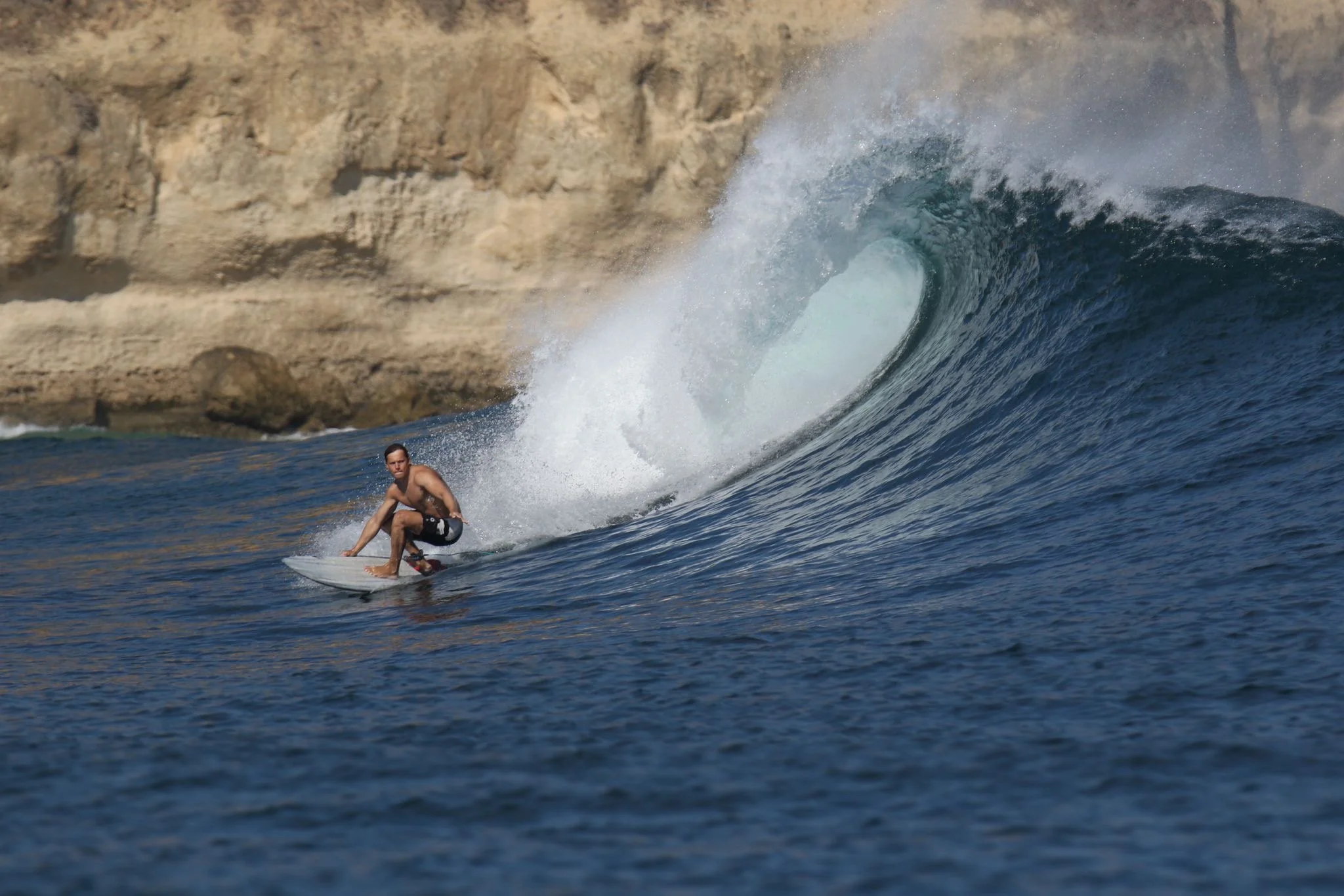
Tom grabbing some rail at Outside Ekas
Ben was thirteen. We had six weeks, three destinations, and the whole of the Indonesian swell season ahead of us. We started in Lombok — deliberately, carefully — because when you have that much time and that many waves to come, the smart move is to ease in slowly.
Six weeks in Indonesia was not a spontaneous decision. It was the kind of trip you plan for, save for, and think about for a long time before it actually happens. Three destinations — Lombok, Bali, and Rote — each chosen for a reason, each offering something different. Ben was thirteen and surfing better than ever. The golden era was in full swing.
We flew via KL as always. One practical note before anything else: do your Indonesian e-visa in advance. It takes minutes online and means you walk straight through on arrival without any hassle. Do not leave it until you get to the airport.
Week one — Ekas Bay
Ekas Bay sits on the south east tip of Lombok — remote, unhurried, and about as far from the tourist trail as you can get on an island that has one. We chose it deliberately as our starting point. It was prime Indonesian swell season and we knew bigger waves were coming further down the trip. Ekas gave us a place to find our rhythm, shake off the travel, and surf ourselves back into form before things got more serious.
We stayed at Ekas Surf Resort for the week. Clean, comfortable, well run — and crucially, they had a boat. This matters more than you might think. When your shoulders have taken enough for one day but your thirteen year old still has energy for another session, being able to put him on the resort boat and watch him head back out without you is exactly what you need.
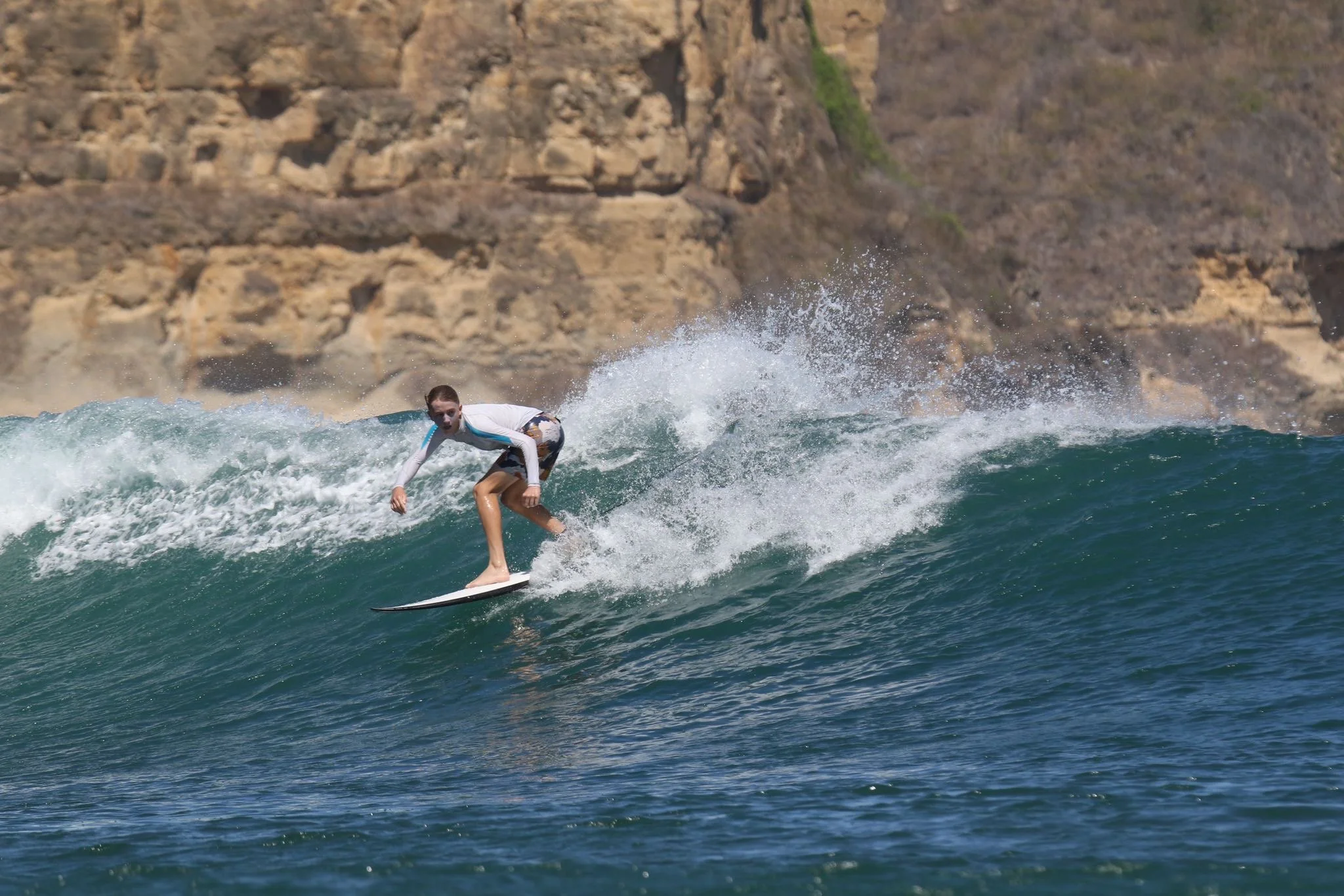
Ben on his backhand at Outside Ekas
Ekas Bay — the breaks
Ekas Beach Break - A sheltered, beautiful bay with gentle right-breaking waves peeling over a calm lagoon — waist deep at most. One of the best places in Indonesia to push a child into their first reef-adjacent waves while still getting something out of it yourself. Safe, forgiving, and endlessly patient with a learner. Also a great kitesurfing bay if that's your thing.
Inside Ekas - A fun A-frame that works for pretty much everything — shortboards, mals, longboards, bodyboards. On a low to mid tide it runs for 150m in both directions. The right hander is the better of the two in our view — the left can be a bit soft and fat. When a bigger swell arrives there's a proper barrelling section on the inside that's worth having. The resort boat gets you there without the paddle.
Outside Ekas - A powerful, long hollow left that breaks under a cliff face and is not for the faint hearted. Experienced surfers only — expect a steep drop, a fast wall, and multiple sections when it's cooking. The upside is that when the swell comes in most people stay at Inside, which means Outside is considerably less crowded. Well worth it if you have the ability to handle it.
What makes Ekas particularly good for surf parents is that you don't have to choose between your session and theirs. The beach break and Inside Ekas give younger surfers everything they need, while Outside gives the parent a proper wave of their own. Everyone gets what they came for.
We surfed Inside Ekas most of the time and both enjoyed the right hander considerably more than the left. When the swell arrived and Outside started working I spent most of my time out there. Ben meanwhile was in his element — picking his own waves, staying out long after I'd called it a day, using the resort boat for late afternoon sessions when my body had had enough.
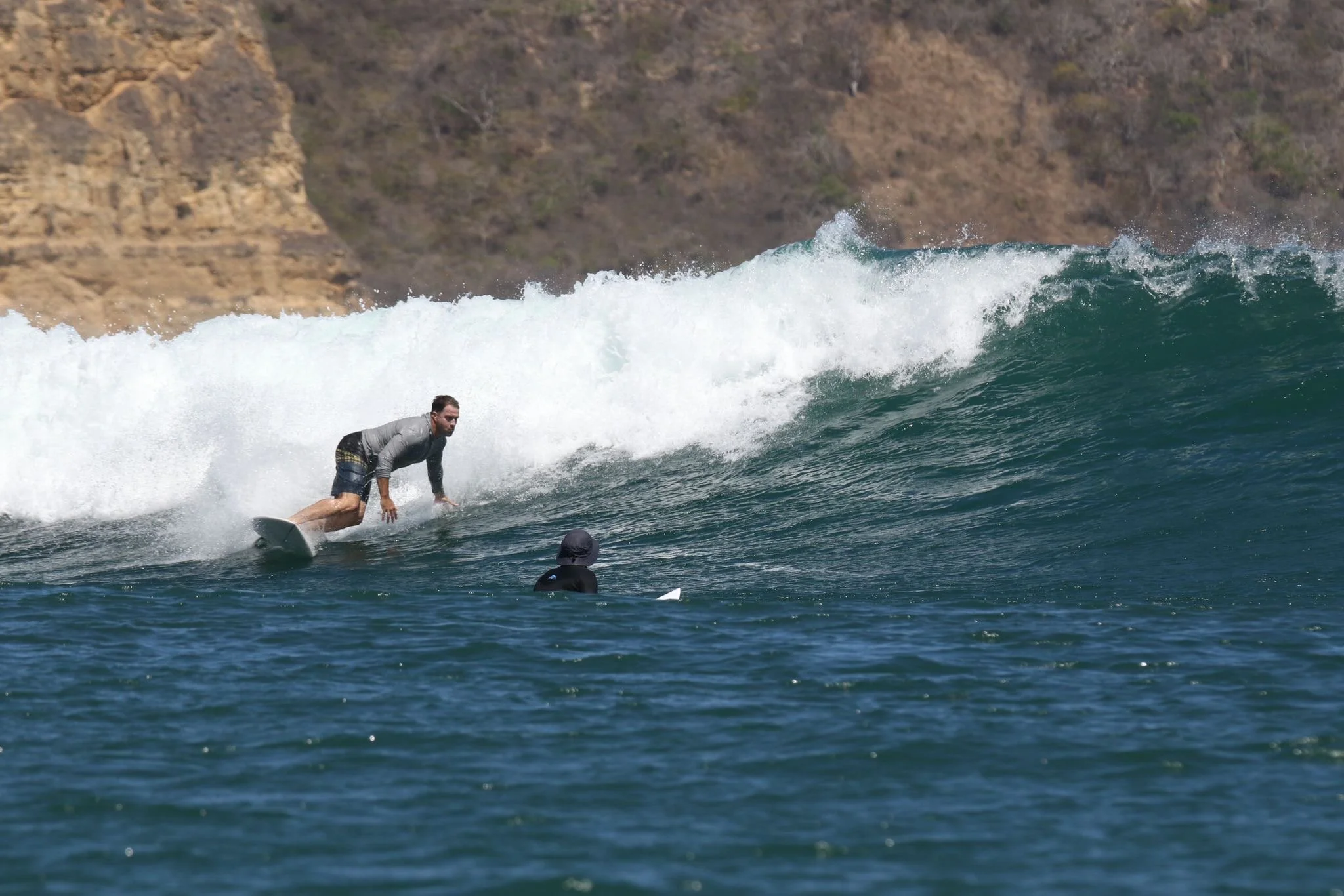
Outside Ekas
An unexpected reunion
One morning at Ekas I walked out and found myself standing next to a familiar face. Mark — one half of the Australian couple we'd met entirely by chance at Telo Island Surf House — was staying nearby at Heaven on a Planet, a place that sat right in front of the wave and offered considerably more luxury than our setup. It wasn't in our budget, but it sounded excellent. We shared some waves and picked up exactly where we'd left off.
And then, by pure coincidence, another familiar face — Adam, Tom and Theo, old friends from the UK, also making their way through Lombok on a surf trip. Suddenly a father and son trip had an extended family around it. The surf world is small in the best possible way.
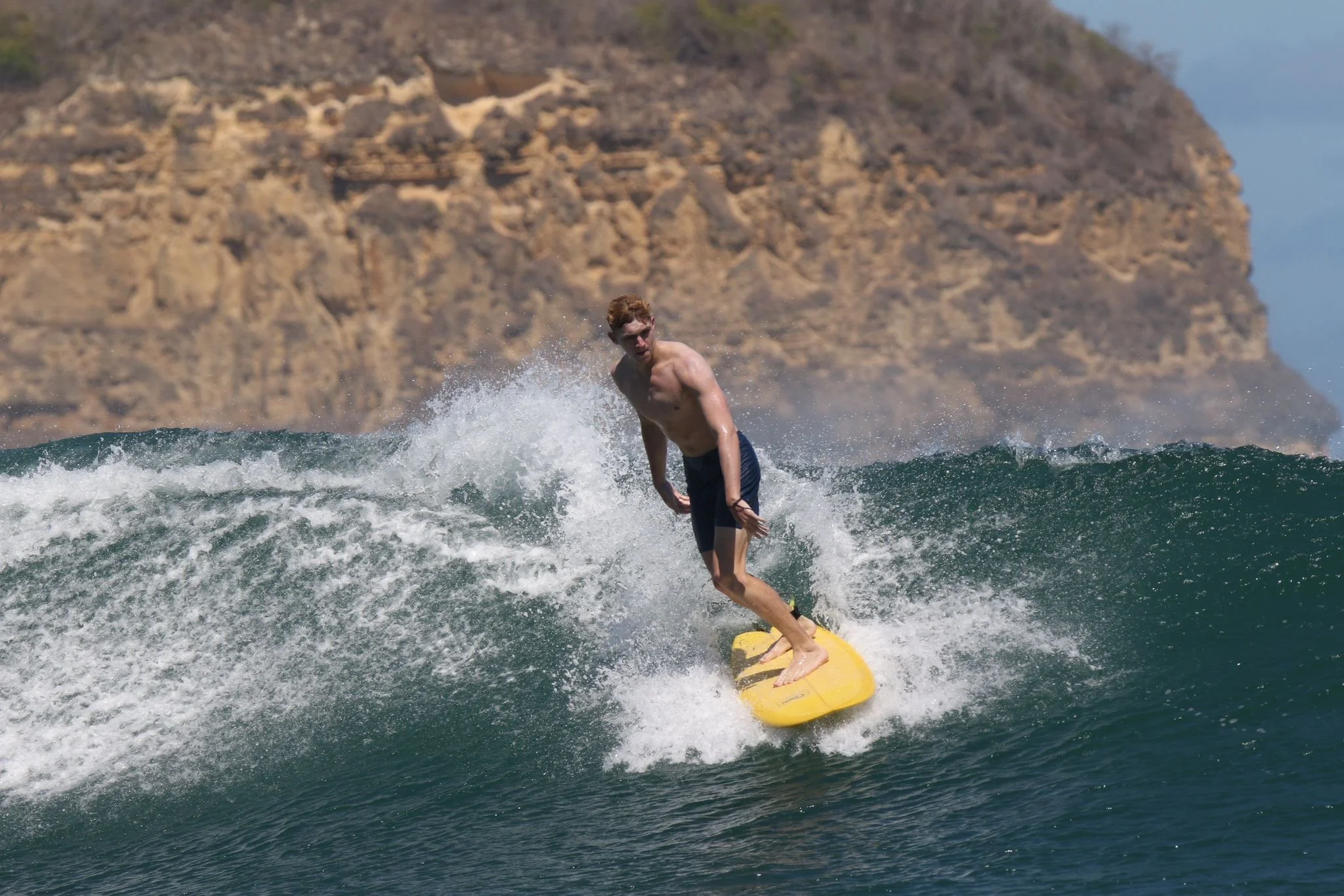
Theo enjoying the Lombok surf
Week two — Selong Belanak and Mawi
After a week at Ekas we moved up the coast to Selong Belanak, basing ourselves at Surya Lombok for the second week — centrally located, comfortable, with genuinely helpful hosts who arranged scooter hire so we could move around easily. Kuta was about twenty five minutes by bike and worth the ride — there are surf shops in town if you need hardware, boards, or anything you've forgotten or broken along the way.
One note of caution: the track down to Mawi is a dirt road and after rain it can get sketchy, particularly if you're not used to riding a bike. Take it carefully.
Mawi — the wave that rewards patience
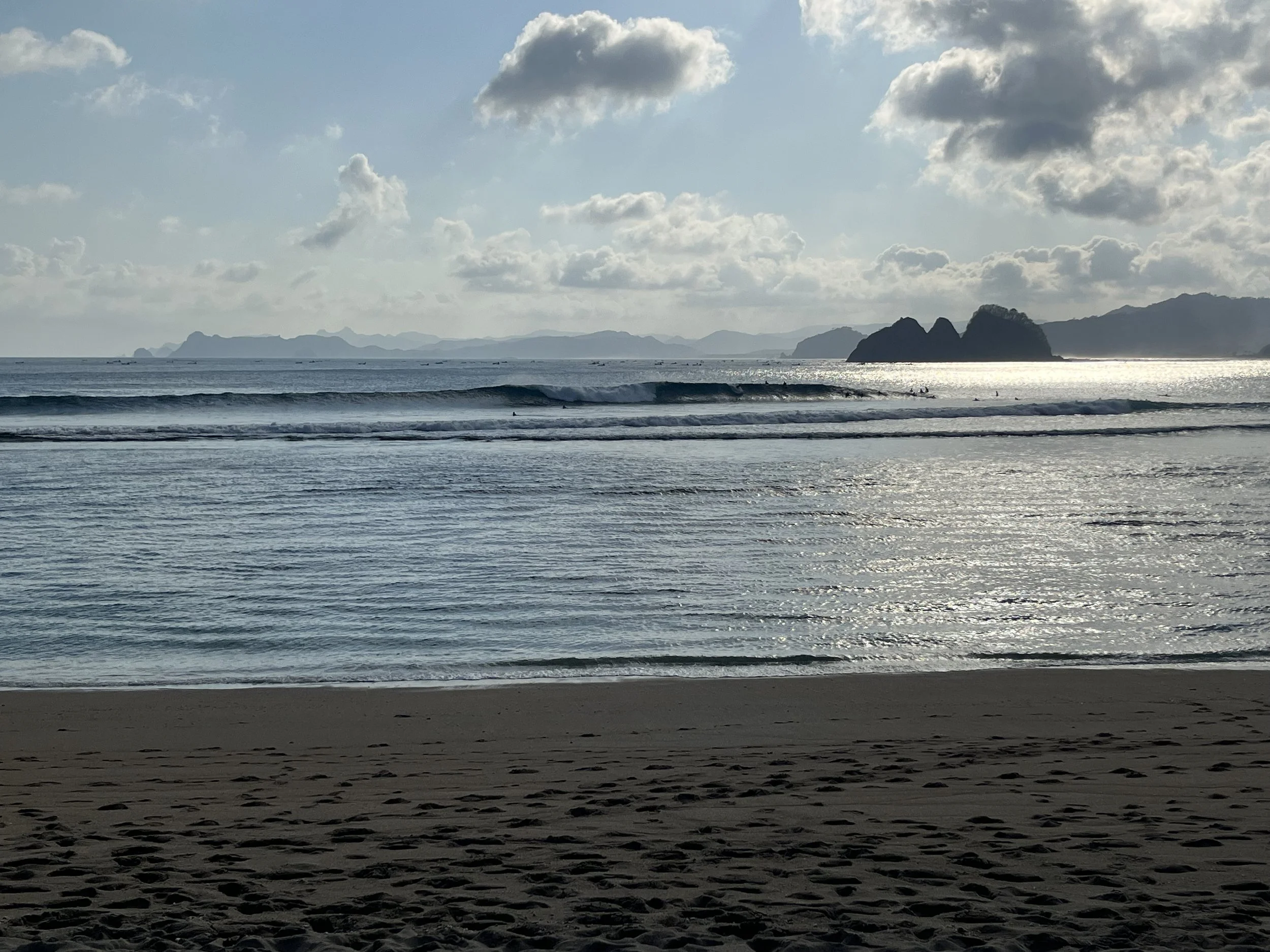
Mawi - Lombok
Mawi — how it changes with size
Head high and below - The surf peaks into an A-frame breaking right and left. The right provides a fast, perfect barrel that you can tuck into and pull out of before the reef gets shallow on the inside. This is the one to hunt on a manageable swell — find it at this size and you'll have one of the best waves in Lombok.
Well overhead and above - The right disappears and the left takes over completely, breaking further out on the reef. At this size it's a different wave entirely — expect a quick drop and a committed bottom turn halfway down the face just to keep up with it. More serious, more rewarding, and considerably more committing.
Mawi is also simply a great place to spend a day regardless of conditions. There are warungs right there at the beach — Nasi Goreng, cold coconuts, fresh fruit — and staying for a sunset beer watching the last waves of the day roll through is one of those simple pleasures that makes a surf trip feel complete.
Moving to Mawi was the right call. The wave was more challenging than Ekas and all the better for it. I could see Ben's surfing improving session by session — more comfortable on the reef, better at reading sets, more decisive on the drop. The golden era, in full swing.
Other waves worth knowing about
More breaks in the area
Selong Belanak Beach -A long, beautiful sandy beach with a forgiving sand-bottom wave that's perfect for building confidence. Great for younger surfers working on their pop-ups and green wave timing. Not a long ride but a lovely setting and exactly the right wave for a rest day or for easing someone into it gently.
Tanjung Aan - An A-frame left and right in a stunning bay with a long sandy beach that begs to be lounged on. Works for all levels but particularly good as a longboarding wave at waist to chest high — a nice wall, relaxed atmosphere, and the kind of session that reminds you why you travel to surf.
Gerupuk — Outside Right - A right-hand reef break at the opening of the bay with a shifty peak out back that gets heavy with size, and a fast inside section that steepens up nicely down the line. Expect a committed drop. A good option when Inside breaks are getting crowded or you fancy something with a bit more bite.
Gerupuk — Outside Left - Further out than Outside Right and rarely surfed — which is its main appeal. Open to the full Indian Ocean swell it offers a steep take off into a short barrel on smaller days. One warning: it closes out on a sharp shallow reef so make sure you know how to pull out through the back before you commit. Worth watching the forecast for the right window.
Gerupuk — Don Don - The most accessible of the Gerupuk breaks — just a couple of minutes by boat from the village. A peaky A-frame going both ways with long rides and proper shoulders that bend around the reef. Fun, performance-friendly, and a good workout for the legs. One more thing — sit in the lineup and look over your shoulder at the hill behind. It's shaped exactly like a turtle. The locals call it Kame — Japanese for turtle — and once you've seen it you can't unsee it.
For parents with younger surfers: Ekas is one of the best introductions to reef surfing in Indonesia — safe beach break, forgiving inside wave, resort boat for easy access, and proper waves for the parent alongside. Save Mawi for when they're ready for something with more bite. Selong Belanak beach is a brilliant option for a rest day surf or for building confidence between bigger sessions.
The practical bits
Getting there - Fly via KL to Lombok — do your Indonesian e-visa online in advance
Week 1 base - Ekas Surf Resort — clean, comfortable, great food, resort boat included
Splash out option - Heaven on a Planet, Ekas — right in front of the wave, more luxurious
Week 2 base - Surya Lombok, Selong Belanak — central, comfortable, scooter hire arranged
Best for kids - Ekas Beach Break, Inside Ekas right hander, Selong Belanak beach
Best for parents - Outside Ekas on a good swell, Mawi when it's on, Gerupuk breaks
Other waves - Tanjung Aan, Gerupuk Outside Right, Outside Left, Don Don
Getting to Mawi - Dirt road track — take care after rain
Surf shops - Kuta — hardware, boards, wax, leashes if needed
Swell season - April to early November — prime time for Indonesian swells
Getting around - Scooter hire — essential for week 2, Surya Lombok will arrange it
Watch out - Learner surfers being pushed into waves beyond their ability is increasing all over Indonesia. There's a big market in teaching backpackers to surf — understandably — but it can be genuinely dangerous, particularly at Inside Ekas and the left at Mawi where people on massive boards can cause real problems. Be aware of your surroundings and pick your spot accordingly.
Respect the locals - Be respectful to local surfers and mindful of your behaviour in the water. They know these breaks better than anyone and can offer great advice on conditions and where to go. Treat them well and they'll look after you.
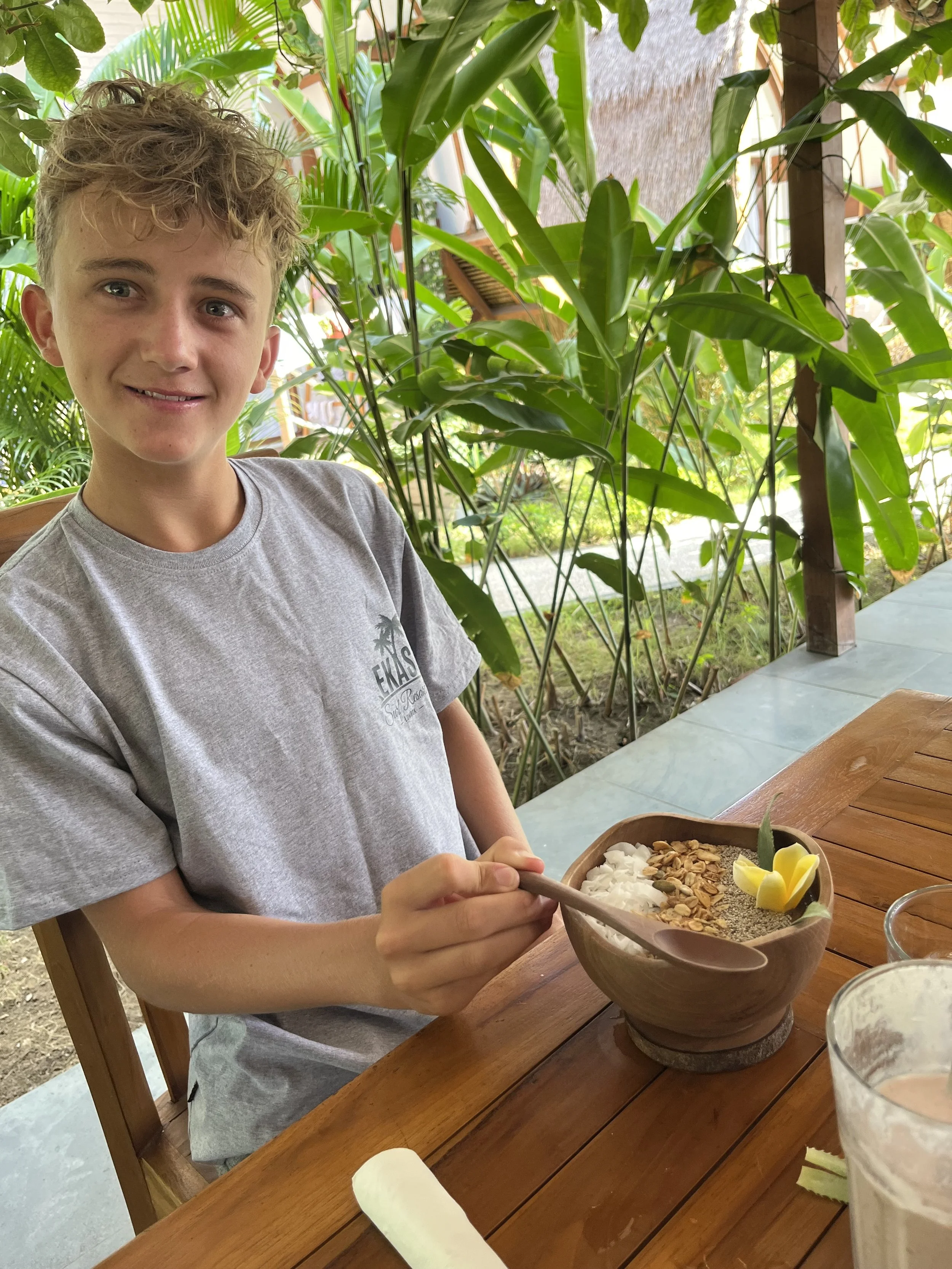
Breakfast at Driftwood
Where to eat near Selong Belanak
Driftwood Cafe - Great for breakfast — excellent coffee and smoothie bowls
Three Sisters - Lovely homemade dumplings
Klub Kembali - Great food, the Rendang burger is a must. Good cocktails and Canard craft beer.
At Mawi - Warungs at the beach - Nasi Goreng, cold coconut, fresh fruit — stay for a sunset beer
In Kuta (25 min by bike) - Krnk Bar and Restaurant Worth the ride in
Cantina Mexicana - The fish tacos in particular. Excellent.
Many more options in Kuta — worth an evening out to explore
Next: Part 2 of six weeks in Indonesia — Bali. More waves, more of the golden era, and the island that needs no introduction but deserves an honest one.
Bali — five days, a new board, and the Rip Curl Cup
Five days in Bali on the way from Lombok to Rote — a new board for Ben, a stop at the surf shops, and the extraordinary luck of being there when the Rip Curl Cup ran at big Padang Padang. Plus an honest take on a place that's changed but still earns its place in any surf traveller's heart.
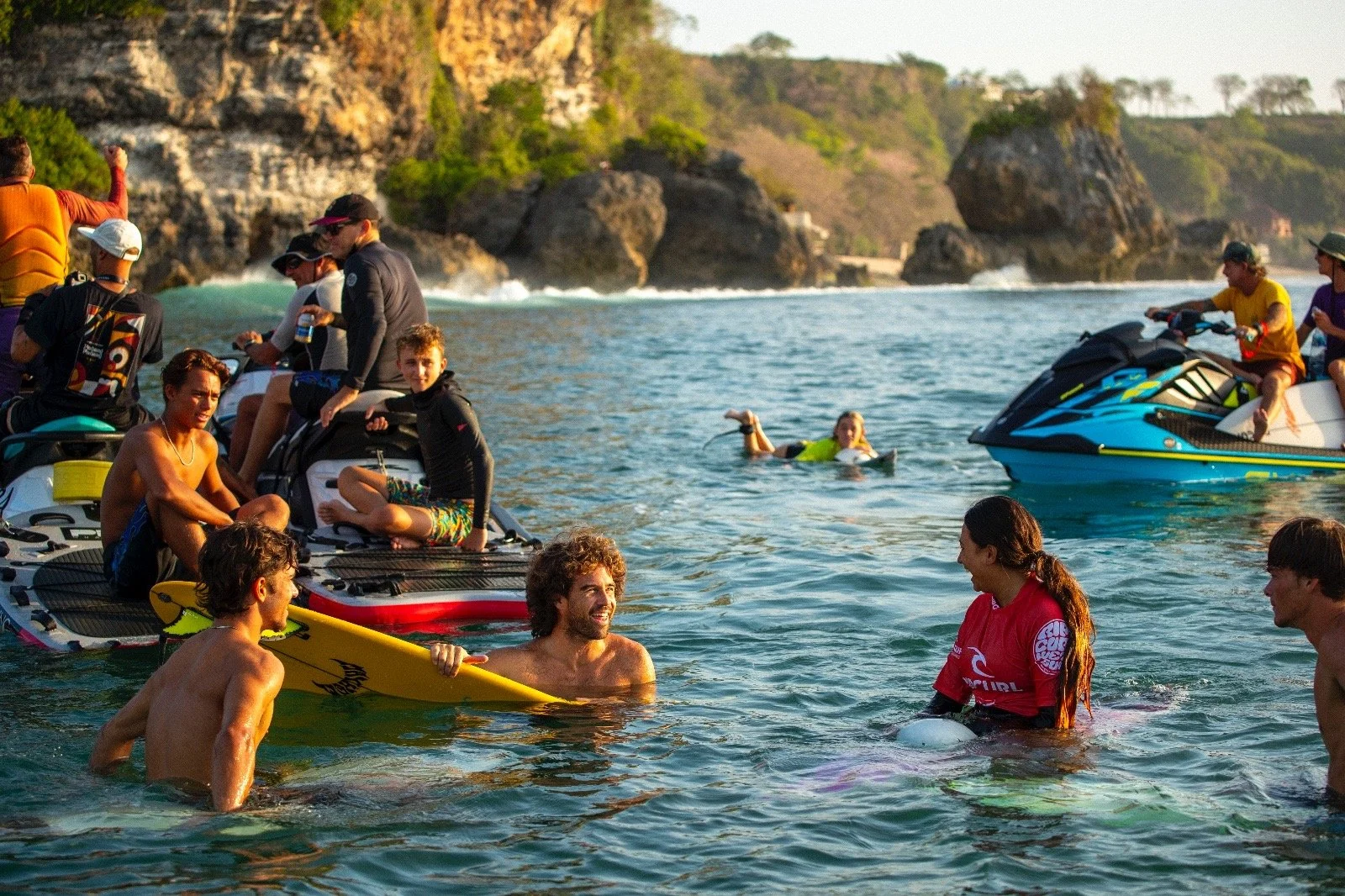
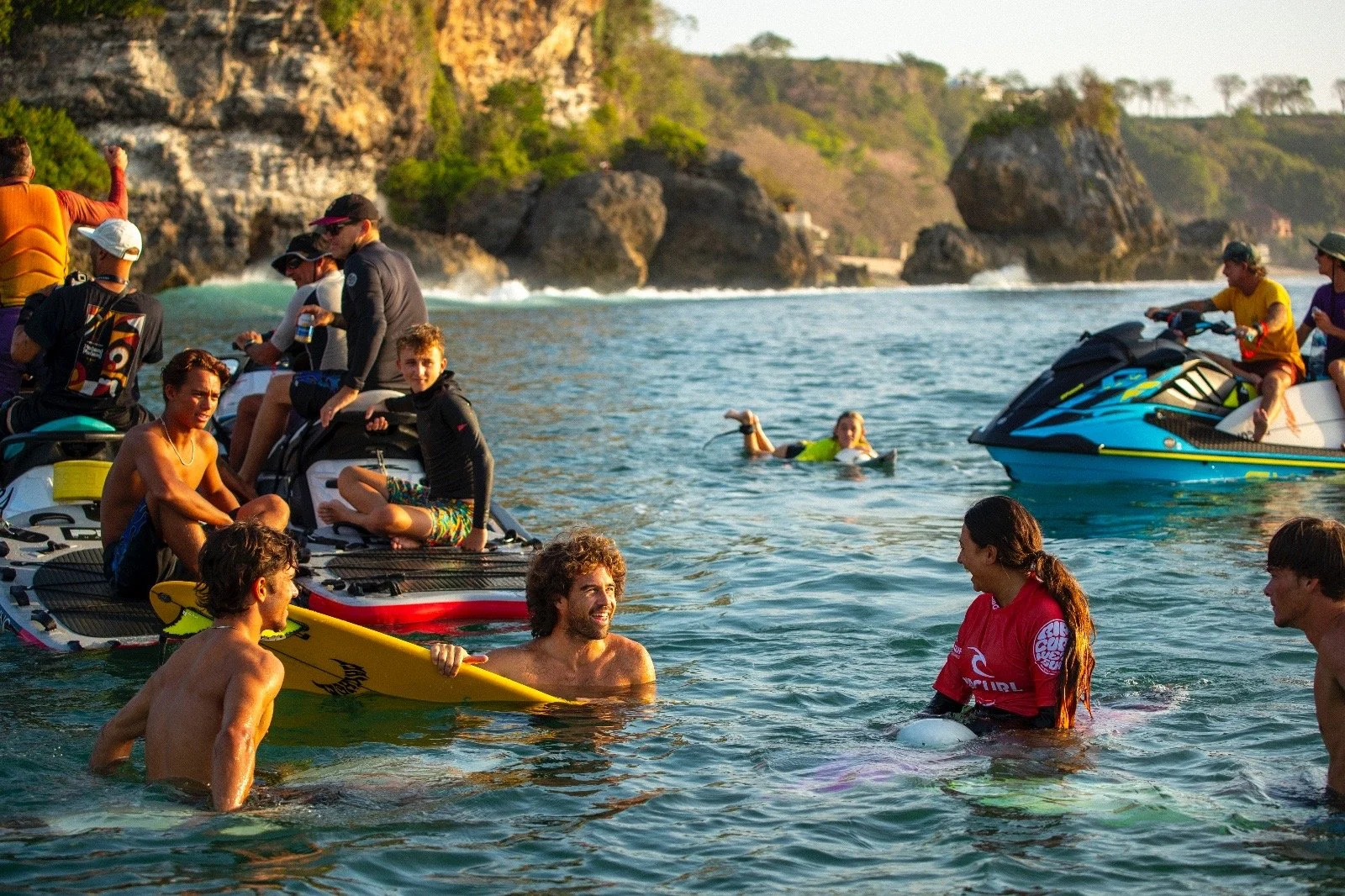
The channel at the Rip Curl Cup
Bali holds a special place in my heart. I got married there. I've had some of the best surfs of my life there. And I've watched it change almost beyond recognition over twenty years. This is not a post about how Bali isn't what it used to be. It's about why it still matters.
I first went to Bali in 2001 with a close friend. We climbed down to Uluwatu, paddled out through the cave, and surfed some of the best waves I have ever had in my life. Outside Corner. The kind of surf that stays with you for decades and makes you understand immediately why people have been coming to this island for so long.
I got married here in 2010. Bali is woven into my life in a way that goes beyond surf trips.
So when people tell me Bali isn't what it used to be, I understand what they mean — but I've never quite agreed with the conclusion. Yes, the traffic is full on. Yes, the breaks are busy. Yes, getting from one end of the island to the other can take far longer than any map would suggest. These things are all true. But Bali has become a victim of its own success, and it's hard to blame it for that.
What Bali still is
The people are as warm and genuinely friendly as they have ever been. The countryside is as beautiful. The food is extraordinary. The surf, if you're willing to get off the beaten track and think outside the box, can still be found quieter than you'd expect. And the Uluwatu end of the island — where I always stay - has everything you need within easy reach: great places to eat, surf shops, proper waves, and great beaches.
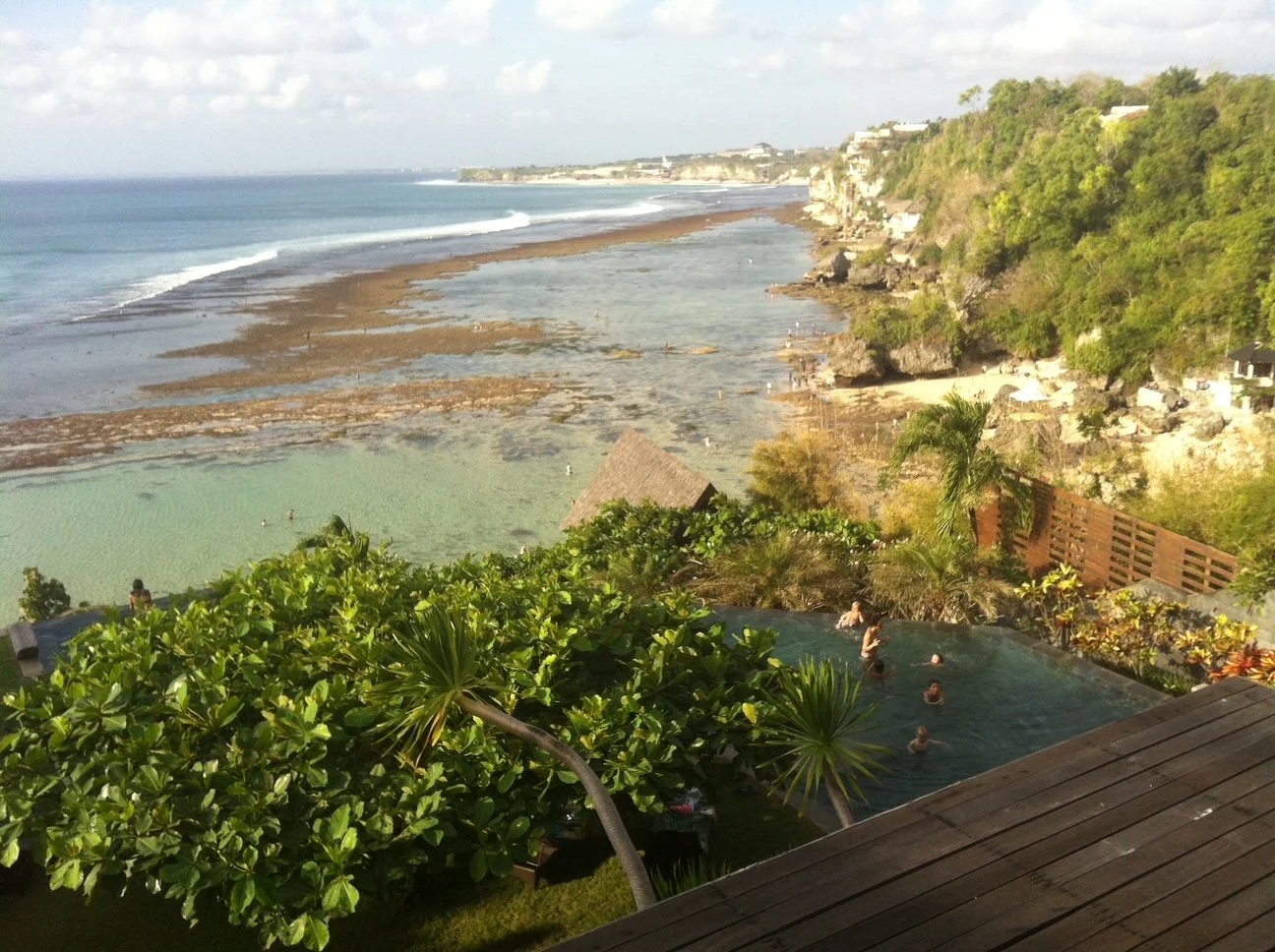
The view from Padang towards Bingin
I no longer travel to Bali with the intention of getting waves. Waves I do get are a bonus. What I go for is the place itself — the chance to catch up with old friends, to sit at Padang and watch perfect waves being ridden by some of the best surfers in the world, to remember why I fell in love with this island in the first place.
Part of my reduced enthusiasm for competing in the lineups is simply a me problem — I have no desire to battle it out with the hyper fit youngsters who dominate the better breaks these days. I've made my peace with that. I pick my moments, surf the less fashionable options, and enjoy what I get. It's a more honest relationship with the place than pretending it's still 2001.
Ben, on the other hand, has been to Bali multiple times in his short life and his enthusiasm for it hasn't dimmed once. If you want proof that Bali still has genuine relevance for young surfers, watch a teenager light up the moment the island comes into view. The older generation's ambivalence says more about us than it does about Bali.
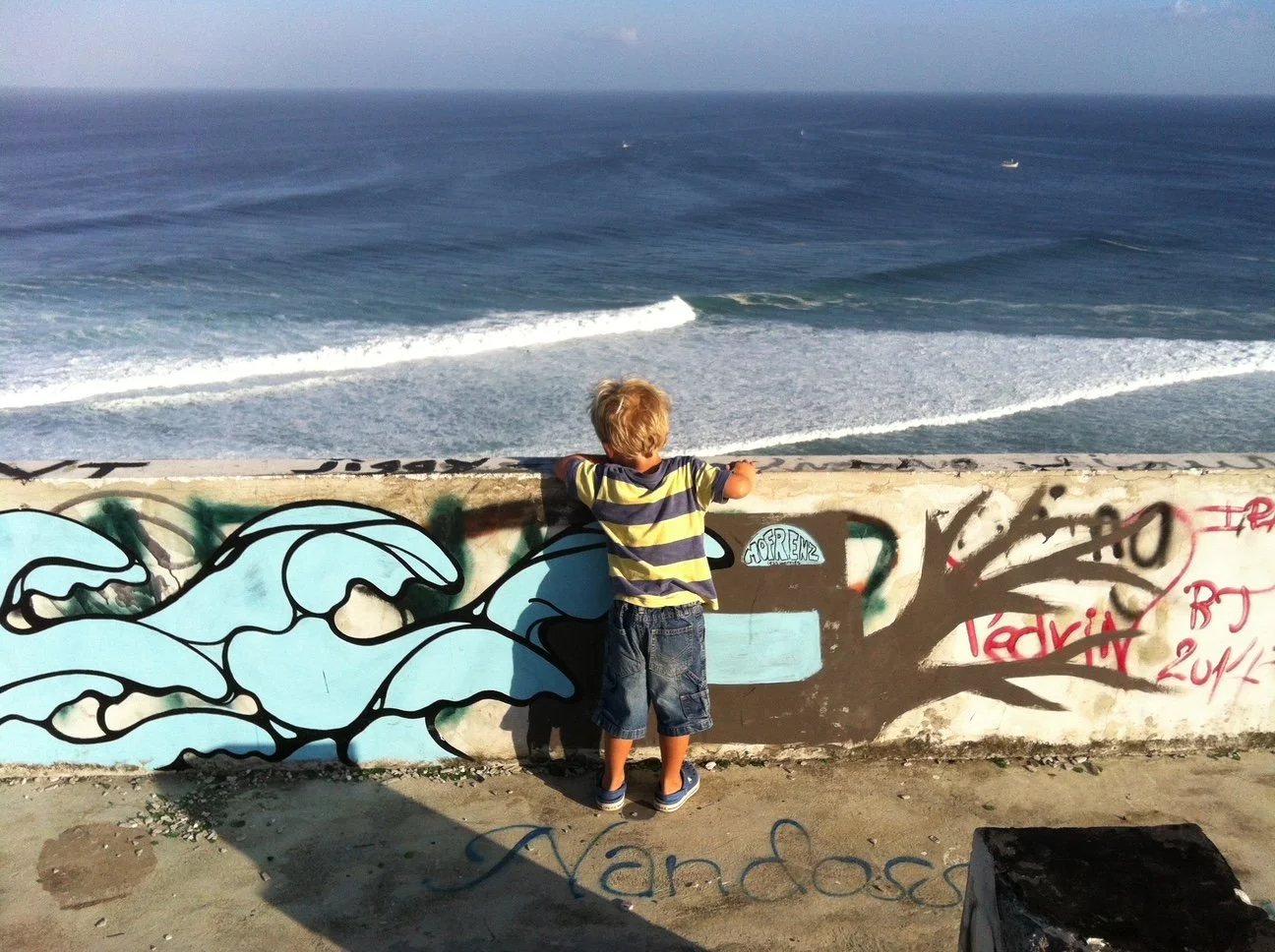
Checking the surf at the lookout on his first trip to Bali
Bali for learning to surf
The waves around Bali aren't easy for beginners — the reef breaks in particular require a solid foundation before you throw yourself at them. Kuta provides the most accessible options for learners, with beach break waves that are considerably more forgiving than anything you'll find on the Bukit Peninsula. Once you can handle a reef break the options open up significantly, especially in the off season when the swells are a little smaller and the lineups are that bit more manageable.
An honest note on Bali: Accept it for what it is. It will never be what it was — but that's okay. Cherish the memories you have of a place rather than bash it for evolving. Use those memories to stoke the fires of exploration and go and find quieter places. If you want comfortable accommodation, great food, waves, nightlife, warm weather and genuine hospitality — Bali still has all of this in abundance. Just be prepared for the traffic, the crowds, and the prices that come with getting western comforts in Indonesia.
Why we were there — a board and some gear
We stopped in Bali for five days on our way from Lombok to Rote — practically as much as anything else. Living in Brunei means no access to decent surf equipment, so Bali is where we stock up. Ben needed a new board. We needed wax, leashes, and a few other things that simply aren't available at home. If you're based in Southeast Asia and travelling through Indonesia, factor in a Bali stop for exactly this reason. The surf shops around Uluwatu and Kuta are well stocked and significantly cheaper than anything you'll find elsewhere in the region.
The Rip Curl Cup Padang
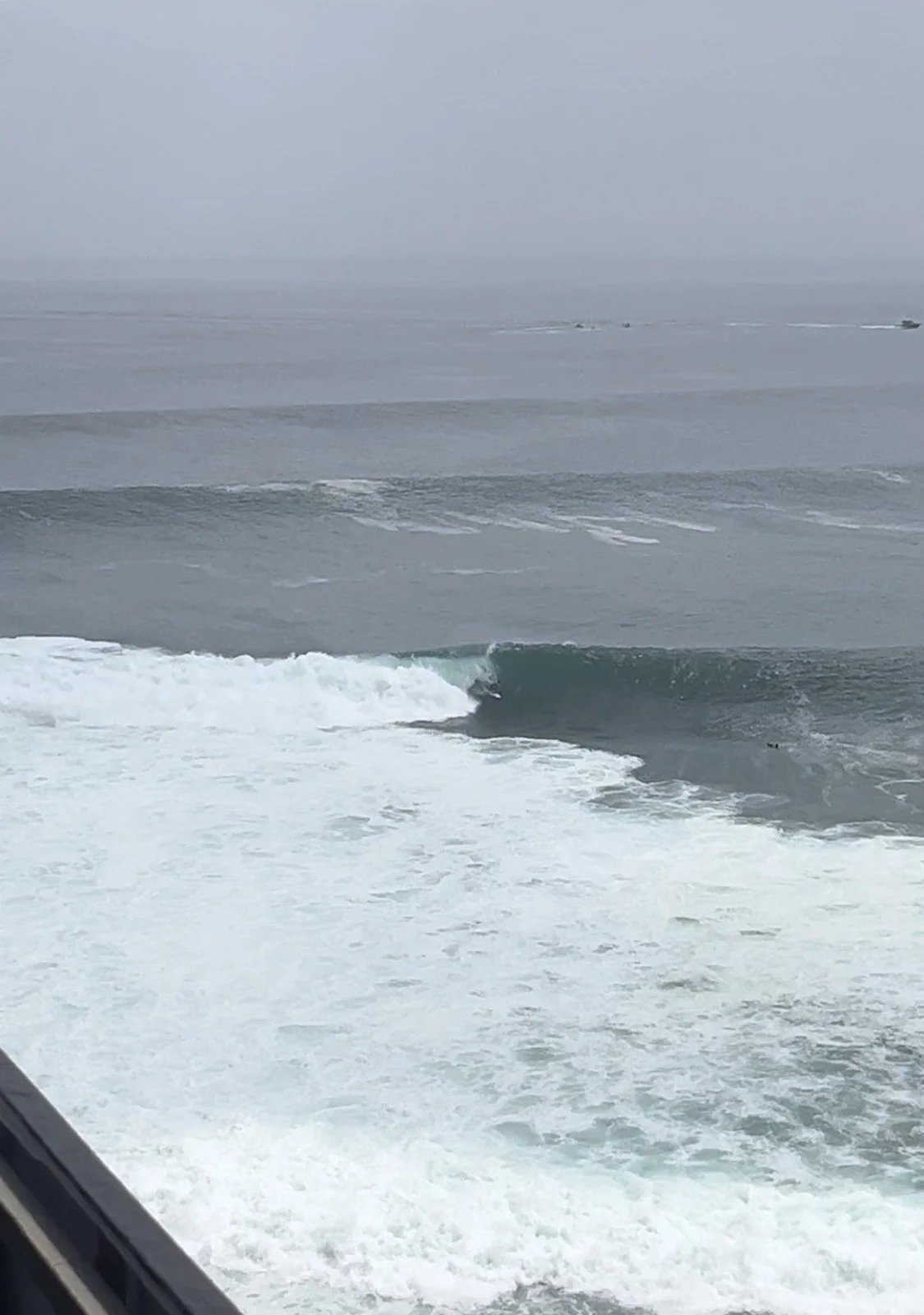
Padang Padang
We were lucky. Timing a trip to coincide with a Rip Curl Cup waiting period is one thing — actually being there when it runs is another entirely. We were there when it ran.
Padang Padang at size is something you have to see to understand. The wave throws out these perfect, heavy, round barrels over a shallow reef and the world's best surfers make it look manageable. It is not manageable for most people. Watching from the channel on a jet ski, even the channel felt serious.
Ben sat on that jet ski and watched his hero Mason Ho pull into barrel after barrel at one of the most celebrated waves in the world. He met him afterwards. There are moments on a surf trip that go beyond surfing — that remind you exactly why you do all of this. This was one of those moments.
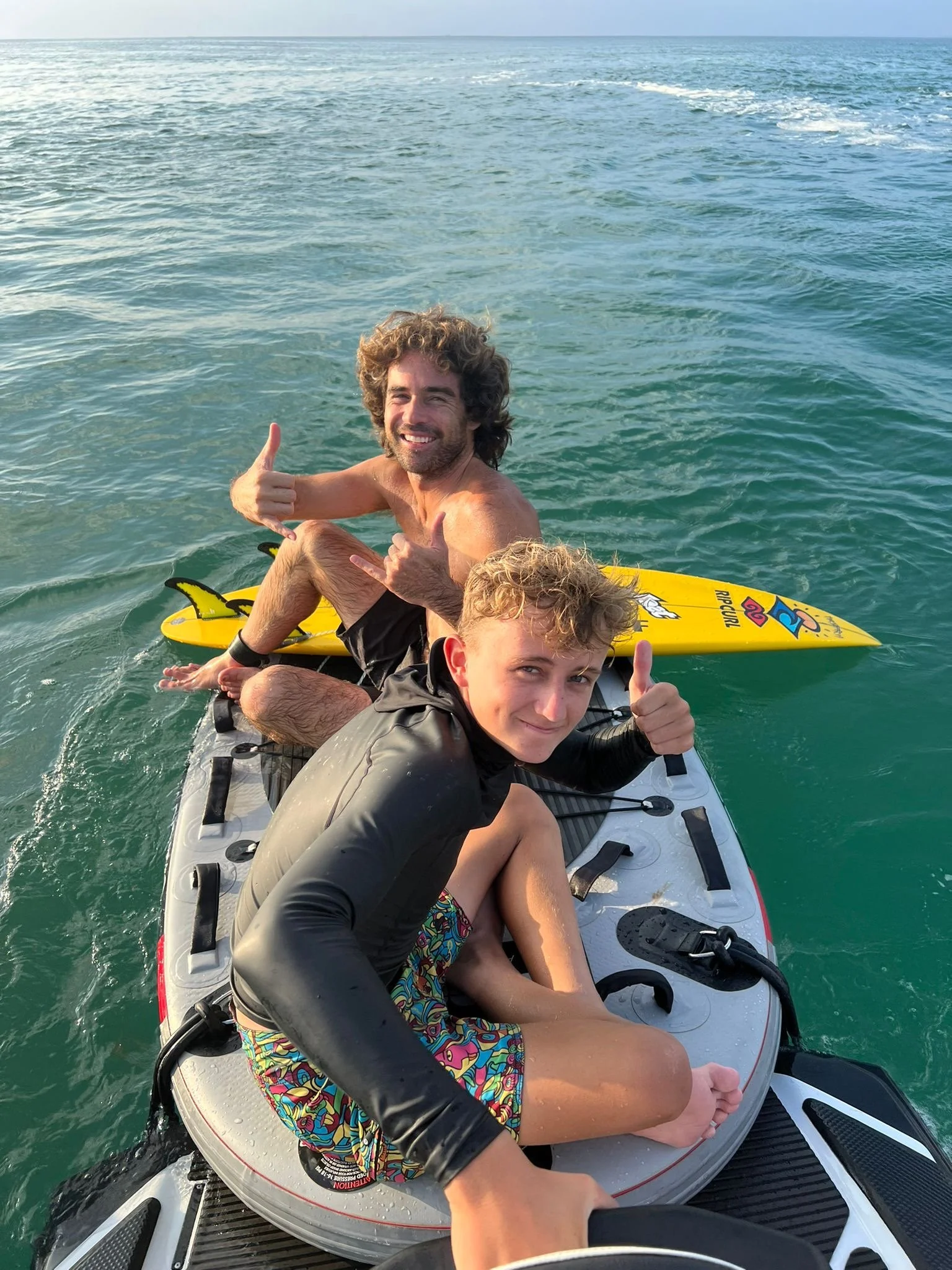
Hanging out on the ski
I watched Ben's face as much as I watched the waves. The expression of someone who has grown up loving surfing, who has been in the water since he was three years old on a Cornish beach, now sitting in the channel at big Padang Padang watching the best in the world do what they do. Properly stoked. Properly present. Nowhere else in the world he'd rather be.
Neither would I.
On going back to places you love
I still paddle out at Uluwatu when I get a chance. It is busy — of course it is. But I catch waves. Good ones. And sitting in the lineup looking back at the cliff, the cave, the temple up above, I always feel exactly what I felt the first time I was here in 2001.
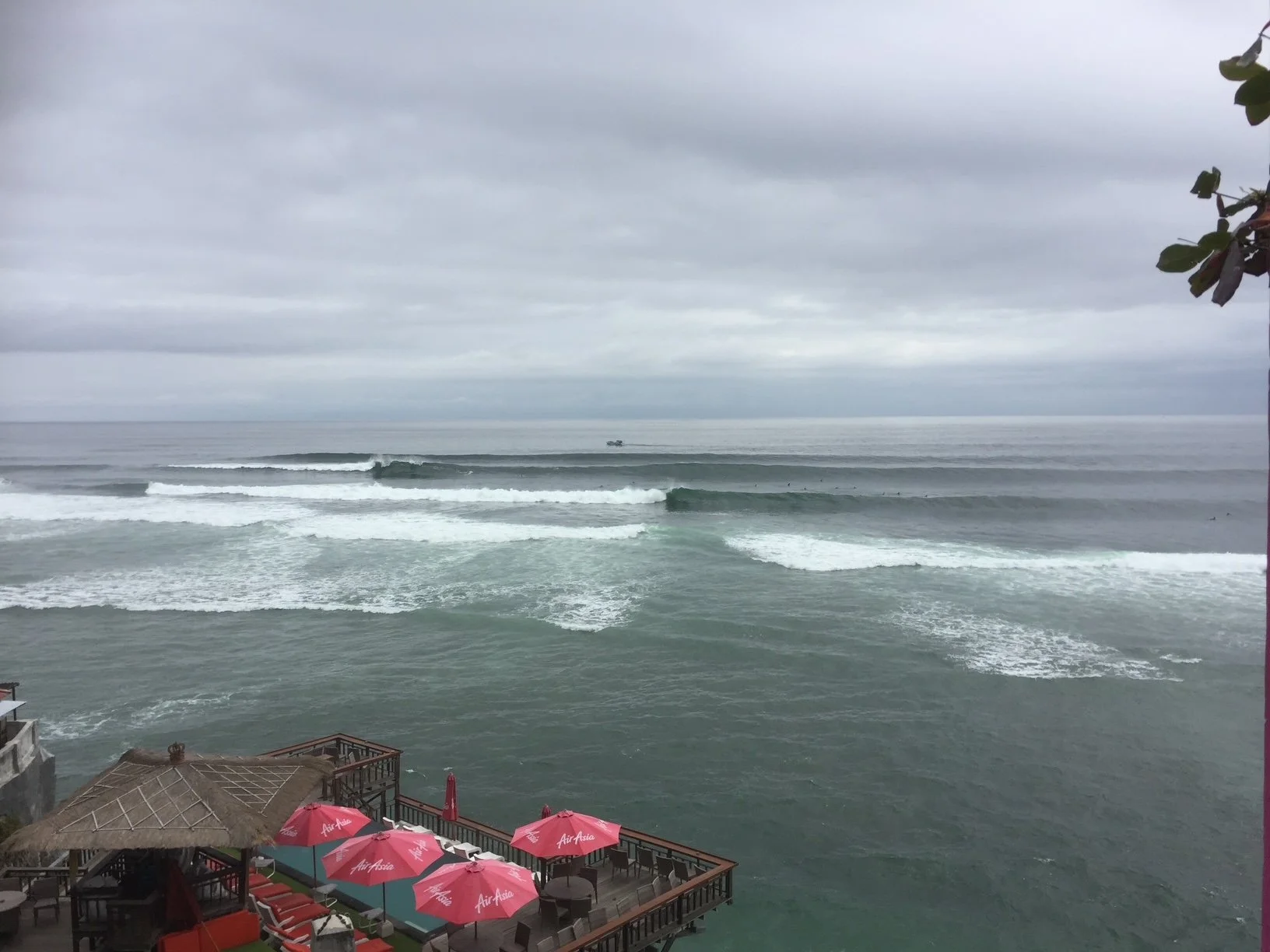
A great view of the peak at Uluwatu
Some places earn that. Bali has earned it.
Don't write it off. Don't let nostalgia turn into resentment. Go back, lower your expectations on the crowd, raise them on everything else — and let it remind you why you fell in love with it in the first place.